

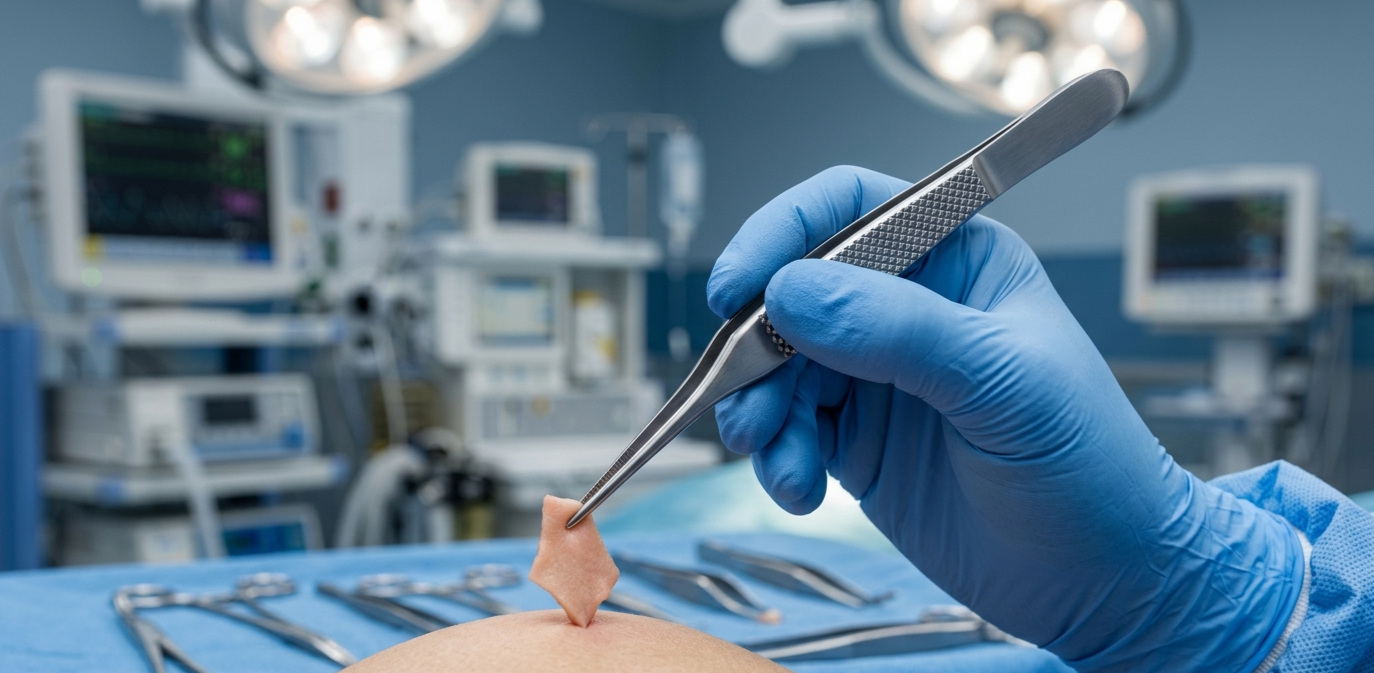
The Small Instrument That Can Make or Break a Procedure
A few years ago, while reviewing a surgical instrument tray for a client in the medical equipment industry, I noticed something interesting. The surgeon spent several minutes discussing sutures, scalpels, and needle holders, but when it came to tissue forceps, the conversation became surprisingly detailed.
At first, I didn’t understand why.
After all, tissue forceps are small handheld instruments that seem simple compared to advanced surgical equipment. However, experienced surgeons explained that improper tissue handling is one of the most common causes of unnecessary tissue trauma during procedures.
A poorly designed forceps or incorrect technique can crush delicate tissue, increase bleeding, make wound closure difficult, and even affect healing outcomes.
That conversation completely changed how I viewed tissue forceps.
Although they are among the smallest instruments on a surgical tray, they are often used hundreds of times during a single procedure. Their role is not merely to hold tissue. They help surgeons maintain precision, visibility, and control while minimizing damage to living structures.
Whether you are a medical student learning surgical basics, a nurse assisting in procedures, a surgical technician preparing instrument sets, or a healthcare buyer selecting instruments for a clinic, understanding tissue forceps is far more important than many people realize.
This guide covers everything you need to know, including different types of tissue forceps, when each type should be used, common beginner mistakes, maintenance tips, and practical lessons that are rarely discussed in textbooks.
What Are Tissue Forceps?
Tissue forceps are precision surgical instruments designed to grasp, stabilize, lift, or manipulate living tissue during medical procedures.
Unlike dressing forceps, which are primarily used for handling dressings and sterile materials, tissue forceps are specifically engineered to hold living tissue securely while minimizing trauma.
The instrument works through a simple spring-action mechanism. When pressure is applied, the tips close and grip the tissue. Releasing pressure allows the tips to open again.
While the design appears straightforward, small differences in tip shape, teeth configuration, and overall size can significantly affect performance.
Why Proper Tissue Handling Matters
Many beginners focus heavily on learning suturing techniques but overlook tissue handling.
Experienced surgeons often say:
“Good tissue handling is just as important as good suturing.”
Here’s why.
When tissue is squeezed too tightly:
- Blood supply may be compromised.
- Bruising can occur.
- Healing may be delayed.
- Tissue edges can become difficult to align.
For example, during skin closure after a minor surgical procedure, excessive pressure from a toothed forceps can leave small puncture marks. While these marks may heal, repeated trauma can negatively affect cosmetic results.
This is one reason plastic surgeons are extremely selective about the tissue forceps they use.
A Real-World Example
Imagine two medical students practicing wound closure.
Student A repeatedly grips skin with excessive force using toothed forceps.
Student B uses gentle traction and releases pressure as soon as tissue is stabilized.
At the end of the exercise:
- Student A leaves visible crush marks.
- Student B preserves the natural tissue edges.
The difference isn’t intelligence or talent.
It’s understanding how tissue responds to pressure.
This lesson applies across nearly every surgical specialty.
The Hidden Cost of Cheap Tissue Forceps
One mistake many clinics make is purchasing instruments based solely on price.
Low-quality tissue forceps often develop:
- Misaligned tips
- Weak spring tension
- Rough edges
- Premature corrosion
When the tips no longer align perfectly, surgeons compensate by applying more force, increasing the risk of tissue damage.
A high-quality forceps may cost more initially but often performs reliably for years when properly maintained.
This is why many healthcare facilities prefer German stainless steel surgical instruments for long-term use.
How Experienced Surgeons Choose Tissue Forceps
Beginners often ask:
“Which tissue forceps are the best?”
The better question is:
“Which tissue forceps are best for this specific tissue?”
Experienced surgeons usually evaluate:
Tissue Fragility
Delicate blood vessels require different forceps than skin.
Surgical Field Size
Smaller spaces require finer instruments.
Procedure Duration
Long procedures often benefit from lightweight forceps that reduce hand fatigue.
Cosmetic Importance
Facial procedures typically require more delicate tissue handling than routine wound closure.
Understanding these factors leads to better instrument selection and better patient outcomes.
Practical Maintenance Tip Most Instrument Guides Ignore
Many facilities focus only on sterilization.
However, routine inspection is equally important.
Before sterilization, check:
✓ Tip alignment
✓ Smooth opening and closing action
✓ Damaged teeth
✓ Surface scratches
✓ Signs of corrosion
Even a tiny bend at the tip can reduce precision dramatically.
Regular inspection often extends instrument life and prevents costly replacements.
Advanced FAQ Section
Can tissue forceps damage tissue?
Yes. Excessive pressure, improper technique, or poorly designed forceps can crush tissue, cause bruising, and delay healing.
Why do some surgeons prefer forceps without teeth?
Atraumatic forceps such as Debakey models distribute pressure more evenly and reduce tissue injury, making them ideal for delicate structures.
How often should tissue forceps be replaced?
There is no fixed timeline. High-quality instruments may last for many years if inspected, maintained, and sterilized properly.
What is the most common beginner mistake?
Applying too much pressure. Most tissue damage occurs because users squeeze harder than necessary.
Are expensive tissue forceps worth the investment?
In many cases, yes. Better materials, superior tip alignment, and improved manufacturing quality often lead to greater precision and a longer service life.
Can the wrong forceps affect wound healing?
Absolutely. Excessive tissue trauma can contribute to inflammation, bruising, delayed healing, and less favorable cosmetic outcomes.
What should buyers look for when purchasing tissue forceps?
Focus on material quality, tip alignment, manufacturer reputation, corrosion resistance, and intended surgical application rather than price alone.
Expert Tip
One of the most valuable habits a beginner can develop is learning to use the minimum force necessary.
The best surgeons rarely grip tissue tightly. Instead, they use controlled, gentle movements that preserve tissue integrity while maintaining precision.
When choosing or using tissue forceps, remember that successful surgery is not about holding tissue firmly—it is about handling tissue respectfully.