

Introduction
The global dental industry continues to evolve with advanced treatment techniques, digital dentistry, and increasing demand for precision instruments. Every successful dental procedure depends on high-quality tools that deliver accuracy, durability, and patient safety. Whether you are a hospital, dental clinic, distributor, importer, or medical procurement company, choosing the right Dental Instruments Manufacturer plays a significant role in achieving consistent clinical outcomes.
A reliable manufacturer not only produces premium-quality instruments but also follows international quality standards, uses medical-grade stainless steel, offers OEM manufacturing, and maintains strict quality control throughout production.
This comprehensive guide explains everything buyers need to know before selecting a dental instruments manufacturer, including manufacturing processes, materials, quality standards, applications, buying tips, and common purchasing mistakes.
Table of Contents
- What is a Dental Instruments Manufacturer?
- Why Quality Dental Instruments Matter
- Types of Dental Instruments
- Benefits of Choosing a Professional Manufacturer
- Key Features
- Applications
- Manufacturing Process
- Materials Used
- Quality Standards
- Comparison Table
- How to Choose the Right Manufacturer
- Common Buyer Mistakes
- Expert Buying Tips
- Frequently Asked Questions
- Final Summary
What is a Dental Instruments Manufacturer?
A Dental Instruments Manufacturer specializes in designing, producing, testing, and exporting instruments used by dental professionals for diagnosis, examination, surgery, orthodontics, implantology, restorative dentistry, and oral hygiene procedures.
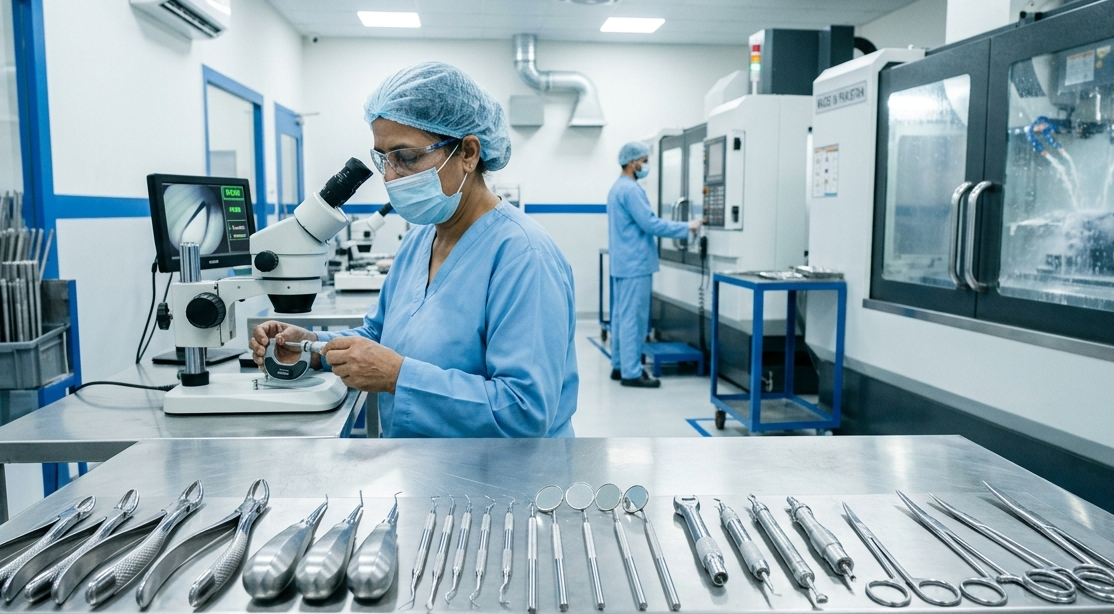
Modern manufacturers combine skilled craftsmanship with CNC machining, precision grinding, polishing, passivation, laser marking, and rigorous quality inspections to ensure every instrument performs reliably in clinical environments.
Professional manufacturers also provide:
- OEM manufacturing
- Private labeling
- Customized instrument development
- Bulk production
- International export
- Quality certifications
- Product customization
Why Quality Dental Instruments Matter
Dental professionals perform delicate procedures where even a slight defect in an instrument can affect treatment outcomes.
High-quality instruments offer:
- Better precision
- Enhanced patient safety
- Improved clinician comfort
- Longer service life
- Reduced maintenance costs
- Superior corrosion resistance
- Consistent clinical performance
Hospitals and distributors also benefit from fewer product complaints and stronger customer satisfaction.
Types of Dental Instruments
A professional manufacturer typically produces a wide range of products, including:
Diagnostic Instruments
- Mouth Mirrors
- Dental Explorers
- Periodontal Probes
Extraction Instruments
- Dental Extraction Forceps
- Root Elevators
- Luxating Elevators
Restorative Instruments
- Composite Placement Instruments
- Burnishers
- Condensers
- Excavators
Periodontal Instruments
- Gracey Curettes
- Universal Curettes
- Dental Scalers
- Sickle Scalers
Orthodontic Instruments
- Distal End Cutters
- Bracket Holders
- Wire Cutters
- Mathieu Needle Holders
Surgical Dental Instruments
- Bone Rongeurs
- Tissue Forceps
- Surgical Scissors
- Needle Holders
- Periosteal Elevators
Implant Instruments
- Implant Drivers
- Surgical Kits
- Bone Expanders
- Implant Tweezers
Benefits of Working with a Professional Dental Instruments Manufacturer
Superior Product Quality
Premium manufacturers maintain strict quality control from raw material selection to final inspection.
Cost Efficiency
Buying directly from manufacturers eliminates unnecessary middlemen.
OEM & Private Label Services
Businesses can launch their own brands using customized packaging, laser marking, and labeling.
Reliable Global Supply
Professional manufacturers maintain stable production capacity for international buyers.
Product Customization
Special instruments can be developed according to customer drawings and specifications.
Long-Term Business Partnership
Trusted manufacturers support continuous product improvements, after-sales service, and flexible production planning.
Key Features of Premium Dental Instruments
High-quality dental instruments generally include:
- Medical-grade stainless steel
- Excellent corrosion resistance
- Precision machining
- Ergonomic handle design
- Satin or mirror finish
- High hardness
- Balanced weight
- Easy sterilization
- Long service life
- Laser marking
- Smooth jaw alignment
- Excellent grip performance
Applications
Dental instruments are widely used in:
- General Dentistry
- Dental Clinics
- Teaching Hospitals
- Oral Surgery Centers
- Implantology Clinics
- Orthodontic Practices
- Periodontal Treatments
- Endodontic Procedures
- Veterinary Dentistry
- Dental Universities
- Medical Procurement Organizations
- Government Healthcare Projects
Manufacturing Process
Producing premium dental instruments requires precision engineering and multiple inspection stages.
1. Product Design
Engineers prepare CAD drawings based on international specifications or customer requirements.
2. Raw Material Selection
Only premium surgical stainless steel is selected.
3. Forging
Steel is forged into the required shape while maintaining structural integrity.
4. CNC Machining
Advanced machinery creates precise dimensions and consistent accuracy.
5. Grinding
Highly skilled technicians refine edges, jaws, and working tips.
6. Heat Treatment
Heat treatment increases hardness and wear resistance.
7. Polishing
Mirror or satin finishes improve aesthetics and corrosion resistance.
8. Passivation
Passivation removes contaminants and enhances resistance against rust.
9. Assembly
Multi-component instruments are carefully assembled and adjusted.
10. Quality Inspection
Each instrument undergoes functional testing, dimensional inspection, and visual examination.
11. Laser Marking
Brand names, logos, batch numbers, or OEM markings are engraved.
12. Packaging
Products are securely packed for international shipment.
Materials Used
Material quality directly impacts durability and performance.
Common materials include:
| Material | Purpose |
|---|---|
| Stainless Steel 410 | General instruments |
| Stainless Steel 420 | Cutting instruments |
| Stainless Steel 440A | High hardness applications |
| Stainless Steel 440C | Premium cutting performance |
| Tungsten Carbide Inserts | Superior cutting durability |
| Titanium | Lightweight specialty instruments |
| Silicone Components | Handle grips |
| Medical-Grade Plastic | Disposable accessories |
Quality Standards
Reliable manufacturers comply with internationally recognized quality systems.
Common standards include:
- ISO 13485
- CE Compliance
- GMP Manufacturing
- Quality Management Systems
- Material Traceability
- Incoming Material Inspection
- In-Process Inspection
- Final Inspection
- Corrosion Testing
- Hardness Testing
- Functional Testing
- Packaging Verification
Strict quality assurance ensures instruments meet the expectations of global healthcare providers.
Comparison Table
| Feature | Professional Manufacturer | Low-Quality Supplier |
| Material Quality | Medical Grade | Mixed Quality |
| Precision | Excellent | Inconsistent |
| Corrosion Resistance | High | Low |
| OEM Services | Available | Limited |
| Quality Control | Multi-stage Inspection | Basic Checking |
| Export Experience | Worldwide | Limited |
| Certifications | International Standards | Often Missing |
| Product Consistency | Excellent | Variable |
How to Choose the Right Dental Instruments Manufacturer
Selecting the right manufacturing partner requires careful evaluation.
Consider the following:
Manufacturing Experience
Choose companies with years of experience in producing dental and surgical instruments.
Product Range
A broad catalog demonstrates strong manufacturing capability.
Quality Certifications
Verify compliance with recognized international standards.
OEM Capabilities
Ensure the manufacturer supports private labeling and custom production.
Export Experience
Global shipping expertise helps prevent logistics and documentation issues.
Communication
Responsive customer service simplifies order management and technical discussions.
Production Capacity
Confirm the supplier can meet long-term volume requirements.
Common Mistakes Buyers Make
Many buyers focus only on price, leading to quality and supply issues.
Common mistakes include:
- Choosing the cheapest quotation
- Ignoring quality certifications
- Not requesting product samples
- Overlooking production capacity
- Failing to verify export experience
- Skipping supplier audits
- Ignoring after-sales support
- Not checking material specifications
- Ordering without clear technical drawings
Avoiding these mistakes reduces procurement risks and improves long-term value.
Expert Buying Tips
Industry professionals recommend:
- Request physical samples before large orders.
- Confirm stainless steel grades.
- Ask about heat treatment and passivation.
- Verify inspection procedures.
- Review OEM packaging options.
- Request production lead times in writing.
- Evaluate communication speed.
- Discuss warranty and replacement policies.
- Build long-term supplier relationships instead of switching frequently.
- Visit the manufacturing facility whenever possible or request a virtual factory tour.
Frequently Asked Questions
1. What does a dental instruments manufacturer produce?
Manufacturers produce diagnostic, surgical, orthodontic, implant, periodontal, restorative, and extraction instruments for dental professionals.
2. Why is stainless steel preferred?
Medical-grade stainless steel offers excellent strength, corrosion resistance, durability, and sterilization compatibility.
3. Can manufacturers provide OEM services?
Yes. Many professional manufacturers offer OEM production, private labeling, custom packaging, and laser branding.
4. What certifications should buyers look for?
Buyers should verify compliance with ISO 13485, CE requirements where applicable, and robust quality management systems.
5. Are custom dental instruments available?
Yes. Manufacturers can develop customized instruments based on customer drawings or specific clinical requirements.
6. How are dental instruments tested?
Products undergo dimensional inspection, hardness testing, corrosion resistance evaluation, functional testing, and final quality inspection before shipment.
7. What should importers ask before placing an order?
Discuss material specifications, manufacturing lead time, OEM options, inspection reports, packaging, payment terms, and shipping arrangements.
Final Summary
Selecting the right Dental Instruments Manufacturer is an investment in quality, reliability, and long-term business success. Premium manufacturers combine advanced manufacturing technologies with skilled craftsmanship, high-grade stainless steel, international quality standards, and comprehensive OEM services to meet the needs of hospitals, distributors, wholesalers, importers, and dental professionals worldwide.