

Introduction
Dental extraction forceps are among the most essential instruments used in modern dentistry. These specialized dental tools are designed to grasp, loosen, and remove teeth from their sockets during extraction procedures. Whether performing routine tooth extractions, removing severely damaged teeth, or extracting impacted teeth, dentists rely on high-quality dental extraction forceps to ensure precision, efficiency, and patient comfort.
As dental technology continues to advance, extraction forceps have evolved to accommodate various tooth anatomies and clinical situations. Different forceps designs allow dental professionals to safely remove specific teeth while minimizing trauma to surrounding tissues and bone structures.
This comprehensive guide explores dental extraction forceps, their types, uses, features, materials, benefits, maintenance, and importance in modern dental practice.
What Are Dental Extraction Forceps?
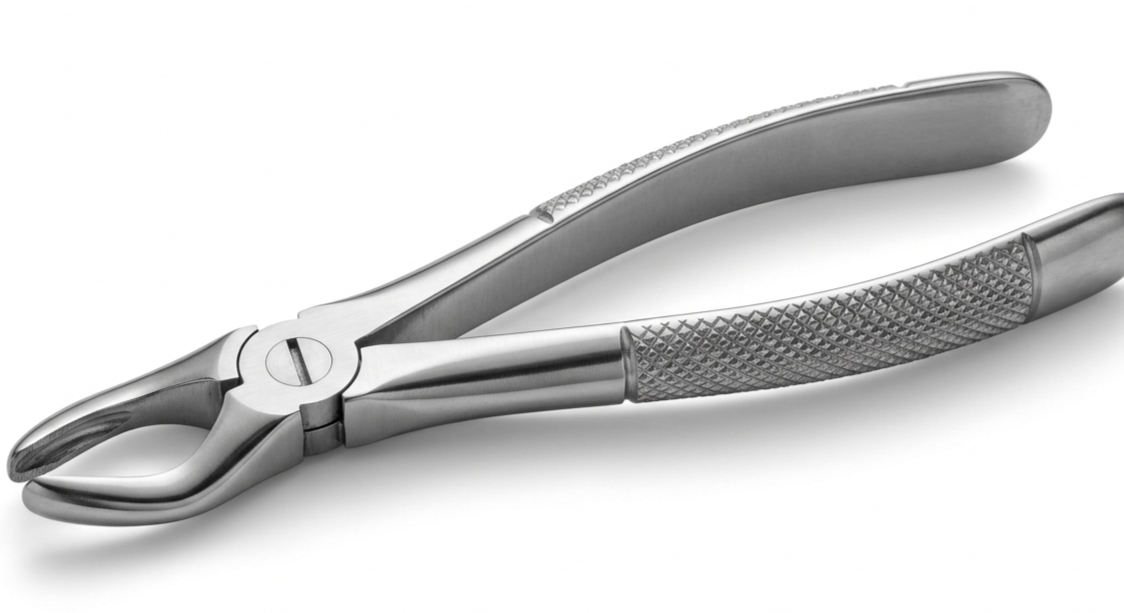
Dental extraction forceps are specialized dental instruments used to remove teeth from the alveolar bone. These instruments are carefully designed to fit the shape and anatomy of different teeth, allowing dentists to apply controlled force during extraction procedures.
A dental extraction forceps consists of three primary components:
Handle
The handle provides a secure grip for the dentist and allows controlled force application.
Hinge
The hinge connects the handles and working beaks while enabling smooth movement.
Beaks
The beaks are the working ends of the forceps that engage the tooth and provide a firm grip during extraction.
The unique design of each forceps model helps dentists safely remove specific teeth from different regions of the mouth.
Importance of Dental Extraction Forceps
Dental extraction procedures require precision and control. Dental extraction forceps play a critical role in ensuring successful outcomes.
Key Benefits
- Secure tooth grasping
- Controlled force application
- Reduced trauma to surrounding tissues
- Improved procedural efficiency
- Enhanced patient safety
- Better extraction outcomes
- Preservation of alveolar bone structure
Without properly designed forceps, dental extractions would be significantly more challenging and potentially more traumatic.
History of Dental Extraction Forceps
The history of dental extraction instruments dates back centuries.
Early practitioners used primitive extraction tools that often caused significant discomfort and complications. As dentistry evolved into a scientific profession, manufacturers developed specialized forceps designed to match specific tooth shapes and anatomical structures.
Today, modern dental extraction forceps are manufactured using advanced engineering techniques and high-quality surgical materials, ensuring precision and reliability.
Types of Dental Extraction Forceps
Various forceps are designed for different teeth and extraction situations.
Maxillary Extraction Forceps
Maxillary forceps are used for extracting upper teeth.
Common Types
- Upper Incisor Forceps
- Upper Canine Forceps
- Upper Premolar Forceps
- Upper Molar Forceps
- Upper Wisdom Tooth Forceps
These forceps feature designs that accommodate the anatomy of upper teeth.
Mandibular Extraction Forceps
Mandibular forceps are specifically designed for lower teeth.
Common Types
- Lower Incisor Forceps
- Lower Premolar Forceps
- Lower Molar Forceps
- Lower Wisdom Tooth Forceps
Their shape allows effective access to lower dental arches.
Universal Extraction Forceps
Universal forceps can be used for multiple extraction procedures and provide versatility in clinical settings.
Pediatric Extraction Forceps
These forceps are designed specifically for primary teeth in children.
Their smaller size allows safe and effective extraction procedures in pediatric dentistry.
Common Dental Extraction Forceps Numbers
Many dental professionals identify forceps by their numbering systems.
Common Examples
- Forceps No. 1
- Forceps No. 17
- Forceps No. 18R
- Forceps No. 18L
- Forceps No. 23
- Forceps No. 53R
- Forceps No. 53L
- Forceps No. 150
- Forceps No. 151
Each design serves a specific purpose based on tooth location and anatomy.
Materials Used in Dental Extraction Forceps
Material quality directly impacts instrument performance and durability.
Surgical Stainless Steel
Most dental extraction forceps are manufactured from premium surgical stainless steel.
Benefits include:
- Corrosion resistance
- High strength
- Long service life
- Sterilization compatibility
- Excellent durability
German Stainless Steel
German stainless steel is widely recognized for its superior craftsmanship and reliability.
Benefits include:
- Precision manufacturing
- Exceptional hardness
- Long-lasting performance
- High resistance to wear
Tungsten Carbide Inserts
Some premium forceps feature tungsten carbide inserts to improve gripping performance and durability.
How Dental Extraction Forceps Work
Dental extraction forceps function through a combination of grip, leverage, and controlled force.
Tooth Engagement
The beaks are carefully positioned around the tooth.
Apical Pressure
The dentist applies pressure toward the root to improve grip.
Luxation
Controlled movements loosen the tooth from surrounding ligaments.
Extraction
The tooth is gently removed from the socket.
Proper technique minimizes trauma and promotes faster healing.
Applications of Dental Extraction Forceps
Dental extraction forceps are used across various dental specialties.
General Dentistry
Routine tooth extractions are among the most common applications.
Oral Surgery
Oral surgeons use specialized forceps for complex extractions.
Orthodontics
Teeth may be extracted to create space for orthodontic treatment.
Pediatric Dentistry
Children’s primary teeth may require extraction under certain circumstances.
Periodontal Procedures
Advanced periodontal disease may necessitate tooth removal.
Features of High-Quality Dental Extraction Forceps
Selecting premium instruments is essential for optimal performance.
Precision Beak Design
Properly designed beaks improve grip and extraction efficiency.
Ergonomic Handles
Comfortable handles reduce hand fatigue during procedures.
Superior Hinge Construction
Smooth hinge action enhances control and precision.
Corrosion Resistance
High-quality materials resist rust and staining.
Excellent Balance
Balanced instruments improve maneuverability and handling.
Advantages of Premium Dental Extraction Forceps
Investing in high-quality forceps offers numerous benefits.
Improved Clinical Performance
Premium instruments provide better control during extraction procedures.
Enhanced Patient Comfort
Efficient extractions can reduce procedure time and tissue trauma.
Longer Instrument Lifespan
Quality materials withstand repeated sterilization and usage.
Cost Effectiveness
Durable instruments reduce replacement costs over time.
Greater Practitioner Confidence
Reliable instruments support consistent clinical outcomes.
Choosing the Right Dental Extraction Forceps
Selecting appropriate forceps requires consideration of several factors.
Tooth Type
Different teeth require different forceps designs.
Patient Age
Pediatric and adult extractions require specialized instruments.
Clinical Complexity
Complex extractions may require advanced forceps configurations.
Instrument Quality
Premium manufacturing improves reliability and longevity.
Practitioner Preference
Many dentists develop preferences based on experience and technique.
Cleaning and Sterilization of Dental Extraction Forceps
Proper maintenance is critical for infection control and instrument longevity.
Cleaning Procedures
After each use:
- Remove biological debris
- Clean thoroughly with approved solutions
- Inspect for damage
- Dry completely
Sterilization Methods
Common methods include:
- Steam autoclaving
- Chemical sterilization
- Low-temperature sterilization systems
Inspection
Regular inspection should evaluate:
- Beak alignment
- Surface condition
- Hinge performance
- Corrosion presence
Common Challenges During Tooth Extraction
Several factors can complicate extractions.
Fragile Teeth
Broken or weakened teeth require careful handling.
Curved Roots
Complex root anatomy may increase extraction difficulty.
Impacted Teeth
Partially or fully impacted teeth often require specialized techniques.
Limited Access
Posterior teeth may be difficult to reach.
High-quality forceps help overcome these challenges.
Dental Extraction Forceps in Modern Dentistry
Modern dentistry increasingly emphasizes minimally traumatic extraction techniques. Advanced forceps designs help preserve surrounding tissues and support future restorative procedures such as implants.
Manufacturers continue to develop innovative extraction forceps with improved ergonomics, enhanced gripping surfaces, and superior materials to meet evolving clinical needs.
Why Dental Clinics Need Reliable Extraction Forceps
Reliable dental extraction forceps contribute to:
- Improved treatment outcomes
- Greater procedural efficiency
- Enhanced patient safety
- Better infection control
- Reduced treatment complications
For these reasons, dental professionals prioritize high-quality extraction instruments in their practices.
Future Trends in Dental Extraction Forceps
Future developments may include:
- Advanced ergonomic designs
- Improved grip technologies
- Lightweight titanium construction
- Enhanced corrosion resistance
- Precision manufacturing techniques
These innovations aim to further improve clinical performance and patient outcomes.
Conclusion
Dental extraction forceps are indispensable instruments in modern dentistry. Their specialized designs enable dentists to safely and efficiently remove teeth while minimizing trauma and preserving surrounding tissues. Available in numerous configurations for different tooth types and clinical situations, these instruments remain a cornerstone of dental surgical procedures.