

Introduction
Every successful surgical procedure depends on the quality and precision of the instruments used by healthcare professionals. Among these instruments, tissue forceps play a vital role in handling delicate tissues with accuracy while minimizing trauma. Whether used in general surgery, plastic surgery, orthopedic procedures, cardiovascular operations, or microsurgery, tissue forceps are essential tools found in every operating room.
Choosing the right Tissue Forceps Manufacturer is one of the most important decisions for hospitals, medical distributors, importers, wholesalers, and healthcare organizations. A reputable manufacturer ensures precision engineering, premium materials, strict quality control, international certifications, and reliable global supply.
Pakistan, particularly Sialkot, has become one of the world’s leading hubs for manufacturing surgical instruments. Professional manufacturers produce tissue forceps that meet international standards and export them to hospitals, distributors, and OEM brands across North America, Europe, the Middle East, Africa, and Asia.
This comprehensive guide explains everything you need to know about selecting a reliable Tissue Forceps Manufacturer, including manufacturing processes, materials, quality standards, applications, OEM services, and why global buyers continue to source surgical instruments from experienced manufacturers.
Table of Contents
- What Are Tissue Forceps?
- Importance of Tissue Forceps in Surgery
- Types of Tissue Forceps
- Features of High-Quality Tissue Forceps
- Materials Used in Manufacturing
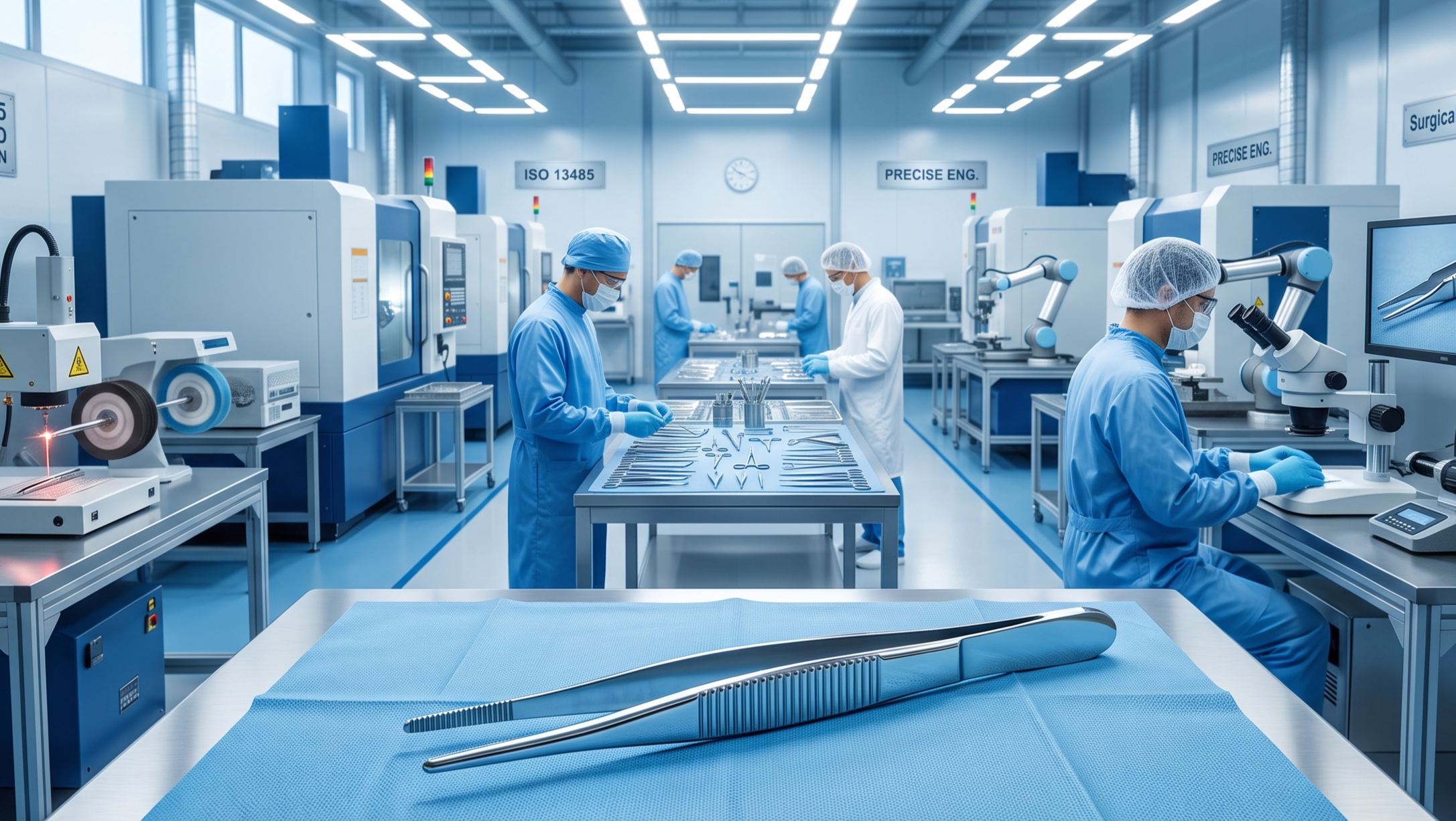
- Manufacturing Process
- Quality Control Standards
- International Certifications
- Applications in Various Surgical Fields
- OEM & Private Label Manufacturing
- Packaging and Sterilization Options
- Why Choose a Professional Tissue Forceps Manufacturer?
- Pakistan’s Advantage in Surgical Instrument Manufacturing
- Tips for Choosing the Right Manufacturer
- Frequently Asked Questions
- Conclusion
What Are Tissue Forceps?
Tissue forceps are handheld surgical instruments designed to grasp, hold, manipulate, and stabilize biological tissues during medical procedures. Their precision tips allow surgeons to work efficiently while minimizing tissue damage.
Unlike dressing forceps, tissue forceps usually feature small teeth at the tips that provide a secure grip on tissues.
These instruments are commonly used in:
- General surgery
- Plastic surgery
- ENT surgery
- Orthopedic surgery
- Cardiovascular surgery
- Neurosurgery
- Dental surgery
- Veterinary procedures
- Microsurgery
Because they directly contact patient tissues, their manufacturing quality is extremely important.
Importance of Tissue Forceps in Surgery
High-quality tissue forceps contribute significantly to surgical success.
Their benefits include:
- Secure tissue handling
- Better surgical precision
- Reduced tissue trauma
- Improved surgical visibility
- Faster procedures
- Enhanced surgeon control
- Lower complication rates
- Better patient outcomes
Poorly manufactured forceps may slip during surgery, damage tissue, or reduce surgical efficiency.
Types of Tissue Forceps
Professional manufacturers produce numerous tissue forceps for different medical specialties.
1. Adson Tissue Forceps
Ideal for:
- Plastic surgery
- Dermatology
- Minor surgical procedures
Features:
- Fine teeth
- Lightweight design
- Excellent precision
2. Brown-Adson Tissue Forceps
Designed for:
- Delicate tissue handling
- Cosmetic surgery
- Reconstructive surgery
Advantages:
- Multiple fine teeth
- Improved tissue grip
- Reduced trauma
3. Russian Tissue Forceps
Commonly used in:
- General surgery
- Abdominal procedures
Features:
- Spoon-shaped jaws
- Excellent tissue control
- Strong gripping capability
4. DeBakey Tissue Forceps
Widely used in:
- Cardiovascular surgery
- Vascular surgery
Benefits:
- Atraumatic design
- Fine serrations
- Gentle tissue handling
5. Gerald Tissue Forceps
Used for:
- Microsurgery
- Ophthalmology
- Plastic surgery
Features:
- Extremely fine tips
- High precision
- Lightweight construction
6. Standard Tissue Forceps with Teeth
Suitable for:
- General surgical procedures
- Routine tissue handling
Advantages:
- Reliable grip
- Durable construction
- Cost-effective
Features of High-Quality Tissue Forceps
A trusted Tissue Forceps Manufacturer focuses on precision engineering.
Key characteristics include:
- Surgical-grade stainless steel
- Corrosion resistance
- Rust-resistant finish
- Precision-machined tips
- Balanced weight
- Comfortable grip
- Satin or mirror finish
- Excellent alignment
- Durable construction
- Reusable after sterilization
Materials Used in Manufacturing
Material selection directly impacts instrument longevity and performance.
German Stainless Steel
Known for:
- Excellent durability
- High corrosion resistance
- Long service life
Japanese Stainless Steel
Offers:
- Superior hardness
- Smooth finish
- High precision
Medical Grade Stainless Steel
Common grades include:
- AISI 410
- AISI 420
- AISI 440A
- AISI 440C
These materials provide:
- Excellent edge retention
- High tensile strength
- Sterilization resistance
- Biocompatibility
Manufacturing Process
A professional Tissue Forceps Manufacturer follows a systematic production process to ensure consistency and precision.
1. Material Inspection
Only premium medical-grade stainless steel is selected after chemical composition testing.
2. Forging
The steel is forged into the desired shape while maintaining structural strength.
3. CNC Machining
Advanced CNC machines ensure:
- Accurate dimensions
- Precision tips
- Consistent quality
4. Heat Treatment
Heat treatment enhances:
- Hardness
- Durability
- Wear resistance
5. Grinding
Experienced technicians refine:
- Jaw alignment
- Tip accuracy
- Surface finish
6. Polishing
Manufacturers offer:
- Satin finish
- Mirror finish
- Matte finish
These finishes improve corrosion resistance and ease of cleaning.
7. Assembly
Each instrument is carefully assembled and aligned.
8. Quality Inspection
Every forceps undergoes:
- Tip alignment testing
- Grip testing
- Surface inspection
- Functional examination
- Dimensional verification
9. Cleaning
Ultrasonic cleaning removes debris before packaging.
10. Final Packaging
Products are packaged according to customer specifications.
Quality Control Standards
Leading manufacturers implement rigorous quality management systems.
Quality inspections include:
- Raw material verification
- Hardness testing
- Corrosion resistance testing
- Passivation
- Dimensional inspection
- Functional testing
- Visual inspection
- Packaging inspection
Multiple inspection stages reduce manufacturing defects and ensure consistent performance.
International Certifications
Reliable manufacturers comply with internationally recognized quality standards.
These may include:
- ISO 13485
- ISO 9001
- CE Marking
- FDA Registration (where applicable)
- Good Manufacturing Practices (GMP)
Such certifications help ensure compliance with global regulatory requirements and build buyer confidence.
Applications in Various Surgical Fields
General Surgery
Used for tissue manipulation during routine procedures.
Plastic Surgery
Essential for delicate tissue handling with minimal trauma.
Orthopedic Surgery
Provides firm grip during musculoskeletal procedures.
Cardiovascular Surgery
Atraumatic forceps protect fragile blood vessels.
Neurosurgery
Fine tissue forceps support highly precise surgical movements.
Dental Surgery
Assist in soft tissue management during oral procedures.
Veterinary Surgery
Suitable for a wide range of animal surgical interventions.
OEM & Private Label Manufacturing
Many hospitals, distributors, and medical brands prefer OEM manufacturing.
Professional manufacturers offer:
- Custom laser logo engraving
- Private labeling
- Customized packaging
- Barcode labeling
- Product coding
- Catalog development
- Custom finishes
- Custom dimensions
- Bulk manufacturing
- Brand-exclusive production
OEM solutions help distributors establish their own medical instrument brands without investing in manufacturing facilities.
Packaging and Sterilization Options
Manufacturers provide packaging options based on customer requirements.
Available choices include:
- Individual poly bags
- Medical-grade blister packs
- Sterile packaging
- Non-sterile packaging
- Bulk export cartons
- Customized retail packaging
- Private label boxes
Proper packaging protects instruments during international shipping and storage.
Why Choose a Professional Tissue Forceps Manufacturer?
Working with an experienced manufacturer offers several advantages.
| Feature | Professional Manufacturer | Low-Quality Supplier |
|---|---|---|
| Material Quality | Premium Surgical Steel | Low-grade steel |
| Precision | Excellent | Inconsistent |
| Durability | Long-lasting | Short lifespan |
| Rust Resistance | High | Limited |
| Quality Inspection | Multi-stage | Minimal |
| OEM Services | Available | Rare |
| Certifications | International Standards | Often unavailable |
| Export Experience | Extensive | Limited |
A professional manufacturer delivers consistent quality, reliable lead times, and long-term business support.
Pakistan’s Advantage in Surgical Instrument Manufacturing
Pakistan, particularly Sialkot, is internationally recognized for manufacturing surgical instruments.
Advantages include:
- Skilled craftsmen with decades of expertise
- Competitive pricing
- High manufacturing capacity
- Modern CNC machinery
- Strong export infrastructure
- International quality standards
- OEM manufacturing expertise
- Flexible production volumes
- Fast global shipping
- Extensive experience serving international markets
These strengths have made Pakistan a preferred sourcing destination for medical distributors and healthcare organizations worldwide.
How to Choose the Right Tissue Forceps Manufacturer
Before placing an order, evaluate the following:
- Manufacturing experience
- Product range
- Certifications
- Quality assurance processes
- OEM capabilities
- Export history
- Customer reviews
- Communication responsiveness
- Lead times
- Packaging options
- Pricing transparency
- After-sales support
Requesting product samples before bulk purchasing is also a recommended practice to verify quality and performance.
Future Trends in Tissue Forceps Manufacturing
The surgical instrument industry continues to evolve with advancements in technology and healthcare requirements.
Emerging trends include:
- CNC-based precision manufacturing
- Laser engraving for traceability
- Enhanced corrosion-resistant finishes
- Lightweight ergonomic designs
- Sustainable manufacturing practices
- Improved sterilization compatibility
- Customized OEM solutions
- Digital quality tracking systems
Manufacturers adopting these innovations are better positioned to meet the evolving needs of modern healthcare providers.
Frequently Asked Questions
What is a tissue forceps manufacturer?
A tissue forceps manufacturer designs, manufactures, tests, and supplies surgical tissue forceps used in hospitals, clinics, and medical facilities worldwide.
Which material is best for tissue forceps?
Medical-grade stainless steel such as AISI 420 or 440 series is widely used because it offers excellent corrosion resistance, strength, and durability.
Are tissue forceps reusable?
Yes. Most surgical tissue forceps are reusable and designed to withstand repeated sterilization when properly maintained.
Can manufacturers provide OEM services?
Yes. Many manufacturers offer OEM and private-label services, including custom logos, packaging, and product specifications.
Why are quality certifications important?
Certifications such as ISO 13485 and CE demonstrate that manufacturing processes follow recognized quality management standards, helping buyers meet regulatory and procurement requirements.
Conclusion
Selecting the right Tissue Forceps Manufacturer is essential for ensuring surgical precision, patient safety, and long-term reliability. High-quality tissue forceps are manufactured using premium medical-grade stainless steel, advanced machining technologies, rigorous quality control procedures, and internationally recognized manufacturing standards.