

Introduction
Selecting the right Surgical Instruments Manufacturer is one of the most important decisions hospitals, distributors, wholesalers, importers, and healthcare procurement teams can make. High-quality surgical instruments directly influence patient safety, surgical precision, operating efficiency, and long-term cost savings.
Today’s medical industry demands far more than standard instruments. Buyers expect manufacturers to provide certified quality systems, premium raw materials, advanced manufacturing technologies, private labeling, OEM production, worldwide logistics, and consistent after-sales support.
Whether you are sourcing general surgery instruments, orthopedic instruments, dental instruments, ENT instruments, gynecology instruments, or customized surgical sets, working with an experienced manufacturer ensures dependable performance throughout the product lifecycle.
This comprehensive guide explains everything buyers should know before selecting a Surgical Instruments Manufacturer, including manufacturing processes, quality standards, materials, buyer tips, common mistakes, and industry best practices.
Table of Contents
- What Is a Surgical Instruments Manufacturer?
- Why Quality Matters
- Types of Surgical Instruments
- Comparison Table
- Benefits of Working with a Professional Manufacturer
- Key Features
- Applications
- Manufacturing Process
- Materials Used
- Quality Standards
- How to Choose the Right Manufacturer
- Common Buyer Mistakes
- Expert Buying Tips
- Frequently Asked Questions
- Final Summary
- Why Choose Professional Enterprises
What Is a Surgical Instruments Manufacturer?
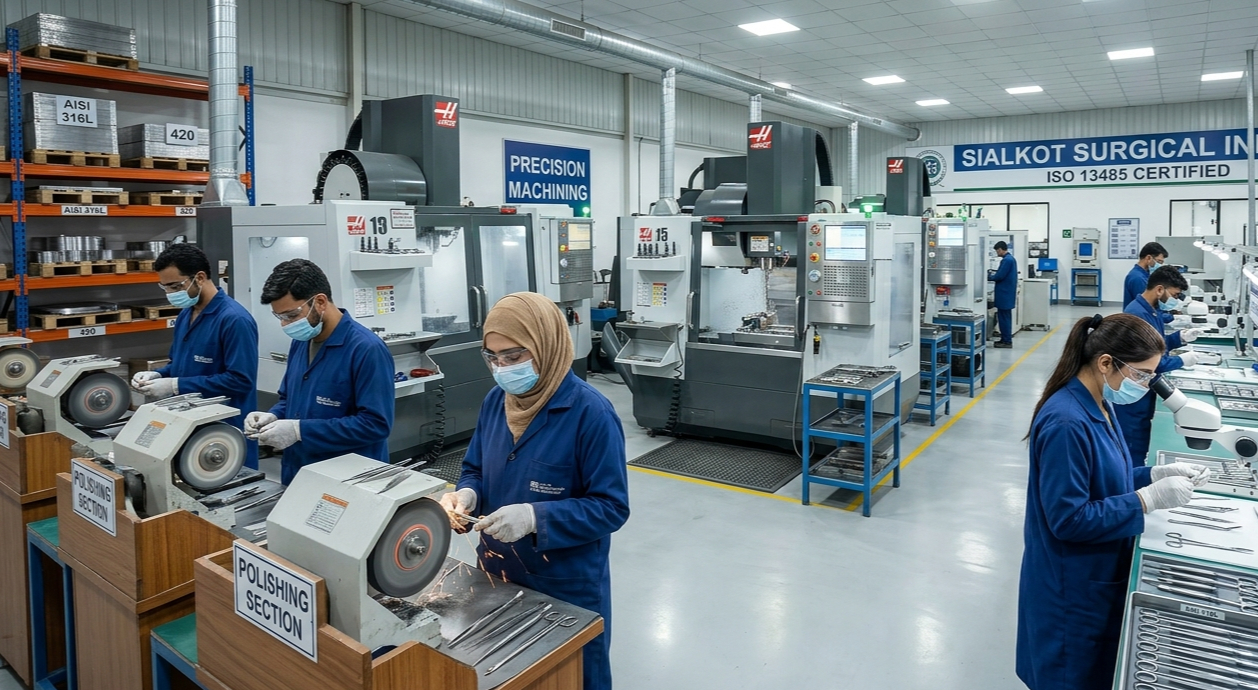
A Surgical Instruments Manufacturer designs, engineers, manufactures, tests, and supplies medical instruments used during surgical procedures. These companies produce reusable and single-use surgical tools for hospitals, clinics, distributors, wholesalers, government organizations, and healthcare suppliers worldwide.
Modern manufacturers combine precision engineering with strict quality management systems to ensure every instrument performs reliably during delicate surgical procedures.
Most established manufacturers also provide:
- OEM manufacturing
- Private labeling
- Product customization
- Laser logo marking
- Sterile and non-sterile options
- International export services
- Packaging customization
- Instrument set assembly
Why Quality Matters in Surgical Instruments
Medical professionals rely on instruments that perform flawlessly under demanding conditions.
Poor-quality instruments may result in:
- Reduced surgical precision
- Corrosion
- Instrument breakage
- Improper grip
- Increased maintenance costs
- Safety risks
Premium surgical instruments offer:
- Better durability
- Excellent corrosion resistance
- Smooth operation
- Longer service life
- Consistent performance
- Improved patient safety
Types of Surgical Instruments
Professional manufacturers usually produce instruments for numerous specialties.
General Surgery
- Scalpels
- Forceps
- Scissors
- Needle holders
- Retractors
Dental Surgery
- Extraction forceps
- Elevators
- Dental mirrors
- Bone rongeurs
- Curettes
Orthopedic Surgery
- Bone cutters
- Osteotomes
- Rongeurs
- Bone holding forceps
ENT Surgery
- Nasal forceps
- Ear instruments
- Laryngoscopes
- Speculums
Gynecology
- Uterine forceps
- Curettes
- Vaginal speculums
Cardiovascular Surgery
- Vascular clamps
- Micro scissors
- Needle holders
Surgical Instruments Manufacturer Comparison
| Feature | Professional Manufacturer | Low-Cost Supplier |
|---|---|---|
| Stainless Steel | Medical Grade | Mixed Quality |
| Precision | Excellent | Inconsistent |
| Quality Inspection | 100% | Limited |
| OEM Services | Available | Often Limited |
| Private Label | Yes | Sometimes |
| International Export | Yes | Limited |
| Certifications | Available | May Be Missing |
| Packaging | Custom | Standard Only |
| Technical Support | Professional | Basic |
Benefits of Working with a Professional Surgical Instruments Manufacturer
Partnering with an experienced manufacturer provides long-term value.
Superior Product Quality
Precision manufacturing ensures every instrument meets exact specifications.
Reliable Supply Chain
Consistent production minimizes delays and inventory shortages.
OEM Manufacturing
Businesses can build their own brand without investing in production facilities.
Private Label Services
Manufacturers produce instruments carrying your company logo and packaging.
Cost Efficiency
Buying directly from manufacturers reduces unnecessary intermediary costs.
Product Customization
Instrument dimensions, finishes, branding, and packaging can all be tailored to customer requirements.
Global Export Expertise
Experienced exporters understand customs documentation, international regulations, and logistics.
Key Features of Premium Surgical Instruments
High-quality surgical instruments generally include:
- Precision engineering
- Ergonomic design
- Satin or mirror finish
- Corrosion resistance
- Reusable construction
- Autoclave compatibility
- Smooth joint movement
- Sharp cutting edges
- Laser marking
- Long service life
Applications
Surgical instruments are used across various healthcare environments.
Hospitals
Daily surgical procedures across multiple specialties.
Surgical Centers
Outpatient and minimally invasive surgeries.
Dental Clinics
Routine and advanced dental treatments.
Veterinary Clinics
Animal surgical procedures.
Medical Universities
Training and educational laboratories.
Government Healthcare Facilities
Public healthcare infrastructure.
Medical Distributors
Wholesale distribution to regional markets.
Manufacturing Process
Producing premium surgical instruments requires precision at every stage.
1. Material Selection
Only medical-grade stainless steel is selected for production.
2. Forging
Raw steel is forged into the required instrument shape.
3. CNC Machining
Computer-controlled machining ensures dimensional accuracy.
4. Heat Treatment
Heat treatment improves hardness, durability, and wear resistance.
5. Grinding
Technicians refine the instrument profile and cutting edges.
6. Hand Finishing
Experienced craftsmen polish and inspect every component.
7. Assembly
Multi-piece instruments are assembled and adjusted.
8. Surface Finishing
Options include:
- Satin finish
- Mirror polish
- Matte finish
- Black coating (special applications)
9. Quality Inspection
Each instrument undergoes dimensional, functional, and cosmetic inspection.
10. Packaging
Products are packaged according to customer specifications before export.
Materials Used
Material quality directly affects performance.
German Stainless Steel
Known for excellent corrosion resistance and long lifespan.
Japanese Stainless Steel
Offers exceptional hardness and precision.
Medical Grade Stainless Steel
Widely used for reusable surgical instruments.
Tungsten Carbide Inserts
Improve grip and increase durability of needle holders and scissors.
Titanium
Ideal for lightweight, specialized surgical instruments.
Quality Standards
Leading manufacturers maintain internationally recognized quality systems.
Typical quality measures include:
- Incoming raw material inspection
- In-process quality control
- Final inspection
- Functional testing
- Corrosion resistance testing
- Hardness verification
- Surface finish inspection
- Traceability documentation
Professional manufacturers also maintain documented quality management systems and comply with international regulatory requirements for medical devices where applicable.
How to Choose the Right Surgical Instruments Manufacturer
Before placing an order, evaluate several important factors.
Industry Experience
Choose manufacturers with years of production expertise.
Product Range
A broad catalog simplifies sourcing.
Manufacturing Capability
Ensure sufficient production capacity for future growth.
OEM Experience
Experienced OEM manufacturers understand branding requirements.
Export History
Global export experience minimizes shipping complications.
Quality Control
Request inspection procedures and quality documentation.
Customer Support
Reliable communication improves long-term partnerships.
Common Mistakes Buyers Make
Many buyers focus only on price while overlooking critical factors.
Avoid these common mistakes:
- Choosing the cheapest supplier
- Ignoring quality certifications
- Not requesting product samples
- Overlooking production capacity
- Failing to inspect packaging quality
- Ignoring after-sales support
- Not confirming export documentation
- Purchasing without clear specifications
Expert Buying Tips
Industry professionals recommend the following:
- Request samples before placing bulk orders.
- Verify manufacturing capability.
- Ask about OEM and private labeling.
- Confirm stainless steel grades.
- Request inspection reports.
- Discuss packaging options early.
- Compare total value—not just price.
- Build long-term partnerships rather than switching suppliers frequently.
- Ensure consistent communication throughout production.
- Review lead times before confirming orders.
Frequently Asked Questions
1. What does a surgical instruments manufacturer do?
A surgical instruments manufacturer designs, produces, tests, and supplies reusable or disposable medical instruments used in surgical procedures.
2. Why is stainless steel preferred?
Medical-grade stainless steel provides excellent corrosion resistance, strength, hygiene, and durability.
3. Can manufacturers provide OEM services?
Yes. Many manufacturers offer OEM production, allowing customers to sell instruments under their own brand.
4. What is private labeling?
Private labeling allows customers to add their logo, packaging, and branding while the manufacturer handles production.
5. Which industries buy surgical instruments?
Hospitals, distributors, wholesalers, government organizations, medical suppliers, veterinary clinics, universities, and healthcare procurement agencies.
6. Are custom surgical instruments available?
Yes. Many manufacturers can customize dimensions, finishes, laser marking, packaging, and complete instrument sets.
7. How can I identify a reliable manufacturer?
Look for manufacturing experience, strong quality control, international export capability, OEM services, responsive communication, and a proven reputation for consistency.
Final Summary
Choosing the right Surgical Instruments Manufacturer is about more than finding competitive pricing. It requires evaluating manufacturing expertise, product quality, material selection, quality control systems, customization capabilities, and international export experience.
A trusted manufacturing partner helps healthcare providers, distributors, and importers receive reliable surgical instruments that meet demanding clinical standards while supporting long-term business growth.
Investing in premium-quality surgical instruments ultimately improves operational efficiency, customer satisfaction, and patient outcomes.
Why Choose Professional Enterprises?
Professional Enterprises is a trusted surgical and dental instruments manufacturer based in Sialkot, Pakistan. We provide OEM manufacturing, private labeling, premium stainless steel instruments, worldwide export services, competitive pricing, and strict quality control.
Whether you are a hospital, importer, distributor, wholesaler, or medical supplier, our experienced team is committed to delivering precision-crafted surgical instruments that meet your business requirements.
Contact us today to request a free quotation for your surgical instrument requirements.