

Introduction
Rock Paper Scissors is one of the most popular hand games in the world. Known for its simplicity, fairness, and universal appeal, the game is played by millions of people across different cultures and age groups. Whether used to settle friendly disputes, make quick decisions, or simply have fun, Rock Paper Scissors remains a timeless game that requires no equipment and can be played anywhere.
Despite appearing simple, Rock Paper Scissors involves elements of psychology, probability, and strategic thinking. Competitive players often study patterns and behavior to improve their chances of winning. Over the years, the game has evolved from a casual pastime into a subject of academic research and international competitions.
In this comprehensive guide, we will explore the history, rules, strategies, benefits, variations, and cultural significance of Rock Paper Scissors.
What Is Rock Paper Scissors?
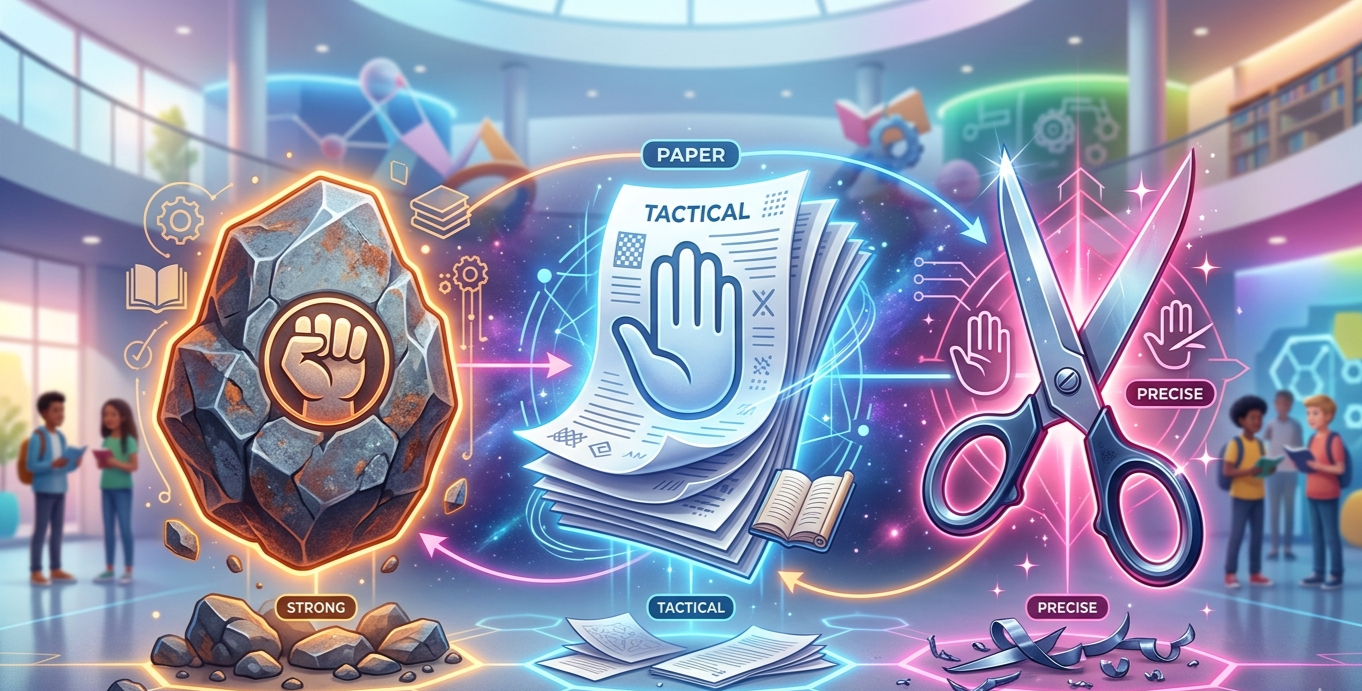
Rock Paper Scissors is a hand game typically played between two participants. Each player simultaneously forms one of three hand gestures:
- Rock
- Paper
- Scissors
The winner is determined according to simple rules:
- Rock crushes Scissors
- Scissors cut Paper
- Paper covers Rock
If both players choose the same gesture, the result is a tie, and another round is usually played.
The simplicity of these rules makes Rock Paper Scissors easy to learn while still offering opportunities for strategic thinking.
History of Rock Paper Scissors
The origins of Rock Paper Scissors can be traced back centuries.
Ancient Beginnings
Historians believe the game originated in China during the Han Dynasty. Early versions of the game were used as entertainment and decision-making tools.
Introduction to Japan
The game later spread to Japan, where it evolved into a form known as “Jan-Ken.” Various hand-gesture games became popular throughout Japanese culture.
Global Expansion
Through cultural exchange and globalization, Rock Paper Scissors spread across Europe, North America, and eventually the entire world.
Today, it is recognized as one of the most universally played games.
Rules of Rock Paper Scissors
The standard rules are straightforward.
Rock
Rock is represented by a closed fist.
Strength:
- Defeats Scissors
Weakness:
- Loses to Paper
Paper
Paper is represented by an open hand.
Strength:
- Defeats Rock
Weakness:
- Loses to Scissors
Scissors
Scissors are represented by two extended fingers.
Strength:
- Defeats Paper
Weakness:
- Loses to Rock
Ties
When both players choose the same gesture, the round ends in a tie and is replayed.
Why Rock Paper Scissors Is So Popular
Several factors contribute to the game’s worldwide popularity.
Easy to Learn
Anyone can understand the rules within minutes.
No Equipment Required
Players only need their hands to participate.
Universal Appeal
Children and adults alike enjoy the game.
Quick Decision-Making Tool
Many people use Rock Paper Scissors to settle disagreements fairly.
Strategic Possibilities
Although partly random, the game also involves psychological elements.
The Mathematics Behind Rock Paper Scissors
At first glance, Rock Paper Scissors appears completely random. However, probability plays a significant role.
Equal Probability
Each gesture has an equal chance of being selected:
- Rock = 33.3%
- Paper = 33.3%
- Scissors = 33.3%
This balance makes the game fair and unpredictable.
Game Theory Applications
Researchers often use Rock Paper Scissors to study:
- Decision-making
- Human behavior
- Competitive strategies
- Probability models
The game is frequently cited in economics and mathematics as a simple example of game theory.
Psychology of Rock Paper Scissors
Human behavior often influences outcomes.
Predictable Patterns
Many players unknowingly follow patterns.
Examples include:
- Repeating previous choices
- Alternating gestures
- Favoring certain hand signs
Reading Opponents
Experienced players observe:
- Body language
- Timing
- Confidence levels
- Previous selections
This information can provide valuable clues.
Beginner Tendencies
Studies suggest that beginners frequently choose Rock more often than other options.
Understanding common tendencies can improve winning chances.
Winning Strategies in Rock Paper Scissors
Although luck plays a role, strategy can increase success rates.
Observe Opponent Behavior
Watch for repeated patterns.
Avoid Predictability
Randomize your choices whenever possible.
Use Psychological Pressure
Confident behavior may influence an opponent’s decisions.
Exploit Repetition
Many players repeat successful moves.
Learn Opponent Habits
Frequent opponents often develop recognizable tendencies.
Competitive Rock Paper Scissors
Many people are surprised to learn that Rock Paper Scissors has a competitive scene.
International Tournaments
Organized tournaments attract players from around the world.
Competitors study strategy, psychology, and probability to gain advantages.
Professional Players
Some participants dedicate significant time to mastering advanced techniques.
Championship Events
International competitions often feature:
- Cash prizes
- National championships
- Team competitions
- World rankings
The competitive community continues to grow.
Educational Benefits of Rock Paper Scissors
Teachers frequently use the game as an educational tool.
Teaching Probability
Students learn basic probability concepts through gameplay.
Encouraging Social Interaction
The game promotes communication and participation.
Developing Decision-Making Skills
Players practice making quick choices under pressure.
Supporting Classroom Activities
Teachers often use Rock Paper Scissors for:
- Group selection
- Team formation
- Icebreaker activities
Rock Paper Scissors in Business and Everyday Life
The game extends beyond recreational use.
Conflict Resolution
People use Rock Paper Scissors to settle minor disagreements.
Workplace Decisions
Some organizations use it to make quick, fair choices.
Team Building
Corporate training programs occasionally incorporate the game.
Event Activities
Rock Paper Scissors competitions can increase engagement during events.
Popular Variations of Rock Paper Scissors
Over time, numerous variations have emerged.
Rock Paper Scissors Lizard Spock
Popularized by television, this version adds:
- Lizard
- Spock
The expanded rules create more strategic possibilities.
Extreme Rock Paper Scissors
Some versions include additional gestures and complex interactions.
Team Rock Paper Scissors
Groups compete rather than individual players.
Tournament Formats
Competitive events often use:
- Best-of-three
- Best-of-five
- Elimination brackets
Rock Paper Scissors Around the World
Different cultures have developed unique versions.
Japan
Known as Jan-Ken, the game remains extremely popular.
China
Historical roots connect the game to ancient Chinese traditions.
Europe
The game became widespread during the twentieth century.
North America
Rock Paper Scissors is commonly used for recreation and decision-making.
Its universal nature has contributed to global recognition.
Digital Rock Paper Scissors
Technology has expanded the game’s reach.
Mobile Apps
Numerous apps allow online gameplay.
Online Competitions
Players can compete against opponents worldwide.
Artificial Intelligence Research
Researchers use Rock Paper Scissors to study machine learning and decision-making algorithms.
Gaming Platforms
The game appears in many digital entertainment products.
Benefits of Playing Rock Paper Scissors
Although simple, the game offers several benefits.
Mental Stimulation
Players analyze behavior and make rapid decisions.
Stress Relief
The game provides quick entertainment and relaxation.
Social Connection
It encourages interaction among participants.
Accessibility
People of all ages can participate.
Fairness
The balanced rules ensure equal opportunities for success.
Common Mistakes Players Make
Many players reduce their chances of winning through predictable behavior.
Repeating Patterns
Opponents quickly recognize repetition.
Emotional Decisions
Players sometimes react emotionally after losing.
Overthinking
Excessive analysis can become counterproductive.
Ignoring Opponent Behavior
Observing patterns is often beneficial.
Avoiding these mistakes can improve performance.
Future of Rock Paper Scissors
The enduring popularity of Rock Paper Scissors suggests it will remain relevant for generations.
Future developments may include:
- Enhanced online tournaments
- Artificial intelligence competitions
- Educational applications
- Global championship expansion
The game’s simplicity ensures continued popularity across cultures and age groups.
Conclusion
Rock Paper Scissors is far more than a simple hand game. Its unique combination of chance, psychology, strategy, and social interaction has made it a global phenomenon. From ancient origins to modern international competitions, the game continues to entertain, educate, and connect people worldwide.