
Introduction
In modern healthcare environments, maintaining sterile and safe instruments is essential for patient care. One of the most critical processes in hospitals, clinics, ambulatory centers, and dental practices is cleaning surgical equipment. Proper cleaning ensures that surgical instruments are free from blood, tissue, and other contaminants before undergoing disinfection or sterilization.
Effective cleaning surgical equipment protocols not only protect patients from infection but also safeguard healthcare workers, extend the lifespan of instruments, and ensure compliance with regulatory standards. Whether you operate a large hospital sterile processing department (SPD) or a small outpatient clinic, understanding the fundamentals of cleaning surgical equipment is crucial.
This comprehensive guide explores methods, standards, technologies, and best practices involved in cleaning surgical equipment to maintain optimal safety and efficiency.
What Is Cleaning Surgical Equipment?
Cleaning surgical equipment refers to the removal of visible soil, organic matter, and other contaminants from reusable surgical instruments. It is the first and most important step in the instrument reprocessing cycle.
Cleaning typically involves:
- Pre-treatment at the point of use
- Manual cleaning with brushes and detergents
- Ultrasonic cleaning for complex instruments
- Automated washer-disinfector systems
- Proper rinsing and drying
Without thorough cleaning, sterilization cannot be effective. Residual debris can shield microorganisms from disinfectants and steam sterilization processes.
Why Cleaning Surgical Equipment Is So Important
1. Infection Prevention
Improper cleaning surgical equipment increases the risk of healthcare-associated infections (HAIs). Surgical site infections (SSIs) can result from contaminated tools that were not adequately cleaned before sterilization.
Proper cleaning:
- Reduces microbial load
- Eliminates biofilm formation
- Prevents cross-contamination
- Protects vulnerable patients
2. Regulatory Compliance
Healthcare facilities must adhere to infection control standards established by organizations such as:
- The Centers for Disease Control and Prevention (CDC)
- The World Health Organization (WHO)
- National accreditation bodies
Failure to follow proper cleaning surgical equipment procedures can lead to penalties, loss of accreditation, or legal consequences.
3. Equipment Longevity and Cost Savings
Surgical instruments are expensive investments. Routine and proper cleaning:
- Prevents corrosion
- Maintains cutting precision
- Reduces repair costs
- Extends service life
Types of Surgical Equipment That Require Cleaning
Cleaning surgical equipment applies to a wide range of reusable medical tools.
Reusable Surgical Instruments
- Forceps
- Scalpels
- Scissors
- Needle holders
- Retractors
These instruments require cleaning after every procedure.
Endoscopic and Minimally Invasive Instruments
Endoscopes and laparoscopic tools contain narrow channels that require specialized cleaning processes to remove debris.
Powered Surgical Equipment
Drills, saws, and other powered devices often require partial disassembly before cleaning surgical equipment procedures can begin.
Surgical Trays and Containers
Instrument trays and sterilization containers must also be thoroughly cleaned to prevent contamination.
Step-by-Step Process for Cleaning Surgical Equipment
Step 1: Point-of-Use Pre-Cleaning
Immediately after use, surgical instruments should be wiped free of visible soil. Instruments should not be allowed to dry, as dried blood is more difficult to remove.
Best practices include:
- Using damp sterile cloths
- Applying enzymatic foam sprays
- Keeping instruments moist until processing
Safe Transport to Decontamination Area
Contaminated instruments must be transported in covered containers to prevent exposure to staff and the environment.
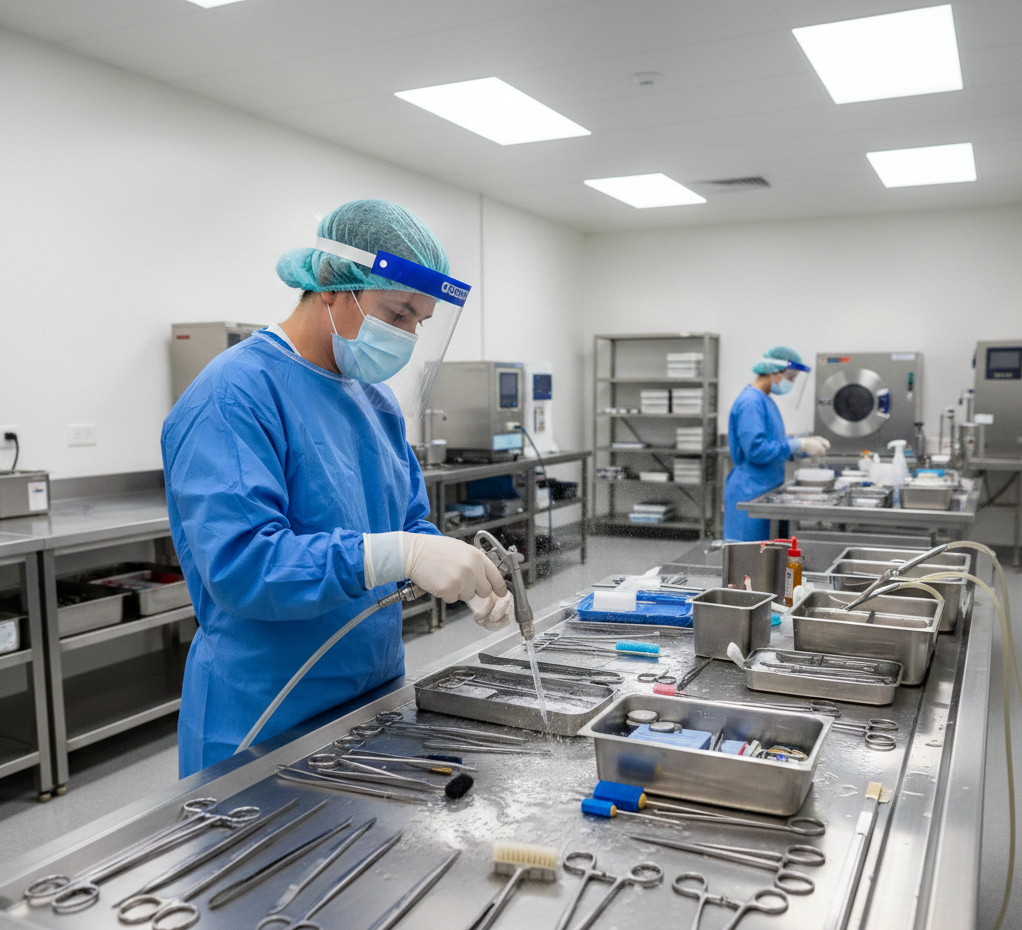
Manual Cleaning
Manual cleaning surgical equipment involves:
- Disassembling instruments
- Using soft brushes
- Cleaning under water to prevent splashing
- Applying enzymatic or neutral pH detergents
Special attention must be given to hinges, serrations, and lumens.
Ultrasonic Cleaning
Ultrasonic cleaners use high-frequency sound waves to remove microscopic debris from hard-to-reach areas.
Benefits include:
- Improved cleaning consistency
- Removal of biofilm
- Enhanced safety
Automated Washer-Disinfectors
Automated systems provide standardized cleaning surgical equipment processes. They use controlled water pressure, temperature, and detergents to ensure consistent results.
Rinsing and Drying
Proper rinsing removes detergent residue. Thorough drying prevents corrosion and bacterial growth.
Cleaning Agents Used in Surgical Equipment Cleaning
Enzymatic Cleaners
Designed to break down proteins and organic materials, enzymatic detergents are highly effective for cleaning surgical equipment.
Neutral pH Detergents
These protect delicate instruments from corrosion and surface damage.
Water Quality
Using deionized or softened water reduces mineral deposits and staining.
Manual vs Automated Cleaning Surgical Equipment
Manual Cleaning
Advantages:
- Ideal for delicate instruments
- Allows close inspection
Limitations:
- Labor-intensive
- Higher variability
Automated Cleaning
Advantages:
- Consistent results
- Reduced exposure risk
- Increased efficiency
Limitations:
- Equipment cost
- Not suitable for all devices
Most healthcare facilities combine both methods for optimal cleaning surgical equipment outcomes.
Best Practices for Cleaning Surgical Equipment
To maintain high standards, facilities should follow these best practices:
- Follow manufacturer instructions for use (IFU)
- Use only approved detergents
- Avoid abrasive tools
- Monitor water temperature
- Perform routine equipment maintenance
- Implement quality control checks
Consistency is essential for safe cleaning surgical equipment processes.
Quality Inspection After Cleaning
After cleaning surgical equipment, instruments must be inspected for:
- Visible debris
- Damage or corrosion
- Proper alignment
- Functionality of moving parts
Magnification tools and adequate lighting improve inspection accuracy.
Staff Training and Competency
Proper training ensures effective cleaning surgical equipment procedures.
Training programs should cover:
- Infection control principles
- Safe chemical handling
- Equipment operation
- Documentation practices
Ongoing competency assessments maintain high performance standards.
Common Mistakes in Cleaning Surgical Equipment
Avoid these frequent errors:
- Delayed cleaning
- Using incorrect detergents
- Overloading washers
- Insufficient rinsing
- Skipping inspection
Correcting these issues enhances patient safety and equipment performance.
Documentation and Traceability
Accurate record-keeping is vital in cleaning surgical equipment processes. Documentation should include:
- Date and time of cleaning
- Equipment used
- Staff responsible
- Maintenance records
Traceability improves accountability and regulatory compliance.
Technology Advancements in Cleaning Surgical Equipment
Modern innovations include:
- Automated washer-disinfectors with digital monitoring
- Barcode tracking systems
- Advanced ultrasonic cleaning technology
- Smart data recording software
These technologies improve accuracy and reduce human error.
Cleaning Surgical Equipment in Different Healthcare Settings
Hospitals
Large sterile processing departments handle high volumes of instruments daily, relying heavily on automation.
Ambulatory Surgical Centers
These facilities often use compact automated washers and strict workflow systems.
Dental Clinics
Dental instruments require specialized cleaning surgical equipment protocols due to exposure to saliva and blood.
Each setting must tailor procedures according to patient load and instrument complexity.
Environmental and Occupational Safety Considerations
Cleaning surgical equipment involves exposure to chemicals and contaminants. Facilities must ensure:
- Proper ventilation
- PPE usage (gloves, masks, gowns)
- Safe chemical storage
- Wastewater management compliance
Sustainable practices are increasingly prioritized in healthcare operations.
The Role of Cleaning Surgical Equipment in Infection Control Programs
Cleaning surgical equipment is the foundation of any infection prevention program. When combined with proper sterilization, it creates a multi-layered defense against pathogens.
Effective programs:
- Reduce infection rates
- Improve patient trust
- Strengthen facility reputation
- Lower healthcare costs
Conclusion
Cleaning surgical equipment is not just a routine task—it is a critical healthcare responsibility. From pre-cleaning at the point of use to automated washer-disinfector cycles, every step must be executed with precision and consistency.
By implementing standardized protocols, investing in staff training, utilizing modern technologies, and maintaining strict quality control, healthcare facilities can ensure safe, compliant, and effective cleaning surgical equipment processes.