

Introduction
The term “also known as fusion or surgical ankylosis” refers to a specific medical procedure designed to eliminate motion in a joint by permanently fusing two bones together. This technique is commonly used in orthopedic, spinal, dental, and reconstructive surgeries when severe pain, instability, or deformity cannot be corrected by other treatments. While joint fusion may sound extreme, it is often a life-changing solution for patients dealing with advanced arthritis, chronic joint degeneration, traumatic injuries, spinal instability, or congenital abnormalities.
In this comprehensive guide, we explore what fusion (surgical ankylosis) is, why it is performed, how the procedure works, its benefits and drawbacks, alternatives, recovery expectations, and long-term outcomes—helping patients and caregivers understand this important surgical technique in simple, detailed, and practical terms.
What Is Fusion or Surgical Ankylosis?
Fusion, medically known as ankylosis, is the process of permanently joining two bones so they grow into one solid unit. The purpose of this procedure is to:
- Reduce chronic pain
- Improve stability
- Correct deformity
- Restore functionality
- Prevent further joint damage
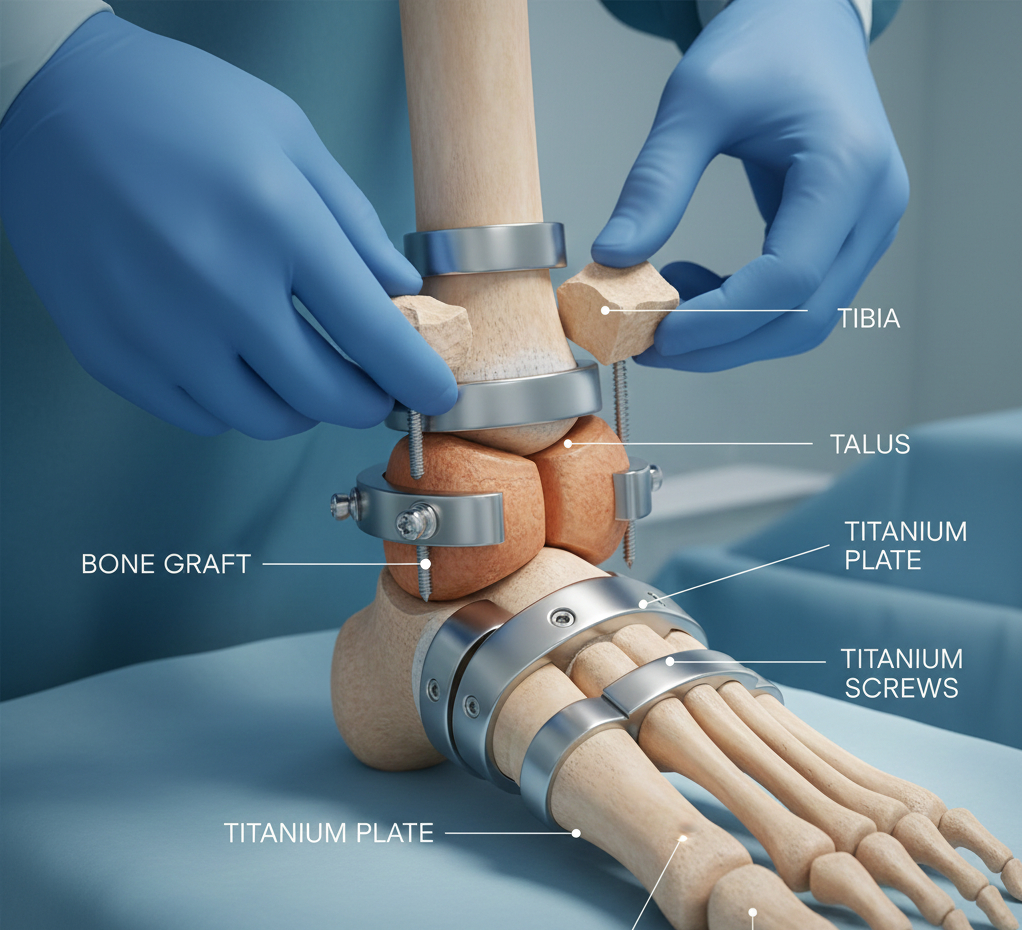
During the procedure, the surgeon places bone grafts, hardware (such as plates, screws, or rods), or synthetic materials between bones. Over time, the bones heal together—similar to how a fracture heals—resulting in a stable, immobile joint.
Despite the loss of motion, patients often experience major pain relief, improved structural alignment, and a better quality of life.
Why Fusion (Surgical Ankylosis) Is Performed
Advanced Osteoarthritis or Degenerative Joint Disease
When cartilage breaks down completely, bones rub against each other, causing severe pain. Fusion eliminates this friction.
Rheumatoid Arthritis or Autoimmune Joint Conditions
Inflammatory conditions can destroy joint surfaces. Fusion stabilizes the joint long-term.
Traumatic Injuries
Severe fractures, ligament damage, or joint instability from accidents may require surgical ankylosis when reconstruction is not possible.
Spinal Disorders
Fusion is common in spinal surgeries for:
- Herniated discs
- Scoliosis
- Spinal instability
- Spondylolisthesis
- Chronic back or neck pain
Congenital Deformities
Some birth defects cause joint instability or abnormal movement that fusion can correct.
Infection or Tumor Removal
When joint structures are damaged from medical conditions, fusion restores stability.
Failed Previous Surgeries
If joint replacement or reconstruction does not work, fusion becomes a reliable solution.
Common Areas Where Fusion (Surgical Ankylosis) Is Used
Fusion can be performed in nearly any joint, but it is most commonly used in:
Spine (Spinal Fusion)
The most widely performed type of ankylosis, spinal fusion stabilizes one or more vertebrae to treat chronic pain or deformity.
Ankle Fusion
Used for severe arthritis, this procedure provides stability and pain relief for patients with limited mobility.
Wrist Fusion
Eliminates pain from injury or arthritis while maintaining strong grip strength.
Finger or Thumb Fusion
Often used when small joints are severely damaged; helps restore hand functionality.
Foot and Toe Fusion
Treats deformities such as bunions, flat feet, or severe joint degeneration.
Dental Ankylosis
Fuses a tooth to the jawbone, often used in orthodontics or after trauma.
Hip or Sacroiliac Joint Fusion
Less common than joint replacement but used when instability persists.
How Surgical Ankylosis Is Performed
While specific techniques vary based on the joint, the general steps include:
Step 1: Anesthesia
Patients undergo general or regional anesthesia depending on the location of surgery.
Step 2: Joint Preparation
The surgeon removes damaged cartilage or bone to create clean surfaces for fusion.
Step 3: Bone Graft Placement
Bone grafts may come from:
- The patient (autograft)
- A donor (allograft)
- Synthetic substitutes
- Biologic materials that encourage bone growth
Step 4: Fixation with Hardware
Metal plates, screws, rods, or pins hold the bones in place while fusion occurs.
Step 5: Closure and Recovery
The surgical site is cleaned, closed, and bandaged. Bone fusion typically takes 3–12 months depending on the joint.
Benefits of Fusion or Surgical Ankylosis
Significant Pain Relief
By eliminating motion in a damaged joint, pain from grinding, inflammation, or instability is virtually eradicated.
Improved Strength and Stability
Fusion provides a strong and stable foundation, especially in the spine and ankle.
Correction of Deformity
Common in spine, foot, and hand procedures, fusion realigns the joint to a healthier position.
Long-Lasting or Permanent Results
Unlike joint replacements, fusion success typically lasts a lifetime.
Enhanced Functionality
While motion is lost, patients often regain better everyday function due to reduced pain.
Risks and Limitations of Surgical Ankylosis
Even though the benefits are significant, the procedure does have limitations:
Loss of Joint Movement
Fusion eliminates motion permanently. However, nearby joints often compensate with minimal impact on daily life.
Risk of Nonunion
In some cases, bones may not fuse adequately, requiring additional surgery.
Infection
As with any surgery, infection is a potential risk but is usually rare.
Hardware Failure
Plates or screws may loosen or break before the bones fully fuse.
Additional Stress on Surrounding Joints
Because the fused joint no longer moves, nearby joints may experience increased wear over time.
Blood Clots or Nerve Damage
Possible but uncommon when proper precautions are taken.
Fusion vs. Joint Replacement: What’s the Difference?
| Feature | Fusion (Surgical Ankylosis) | Joint Replacement |
|---|---|---|
| Motion | Permanently removed | Preserved (artificial joint) |
| Pain Relief | Excellent | Excellent |
| Longevity | Lifetime in most cases | 10–20 years |
| Best For | Severe instability or deformity | Arthritic joints needing mobility |
| Common Areas | Spine, wrist, ankle | Hip, knee, shoulder |
Fusion is typically preferred when the joint is too damaged to replace or instability is too severe.
Recovery After Fusion Surgery
Recovery time varies by joint, but most patients follow these steps:
Immobilization
A cast, brace, or boot protects the fused joint for several weeks.
Pain Management
Medications help control discomfort during healing.
Physical Therapy
Rehab begins gradually and focuses on:
- Strengthening
- Flexibility
- Adapting to new joint limitations
Bone Fusion Monitoring
Imaging tests ensure the bones are healing properly.
Return to Activities
- Light activities: 4–8 weeks
- Full fusion: 3–12 months
- Heavy work or sports: 6–12 months
Long-Term Outlook for Fusion or Surgical Ankylosis
Most patients experience:
- Pain relief
- Improved stability
- Better alignment
- Long-term joint protection
- Enhanced daily functioning
Although motion is lost in the fused joint, overall quality of life usually improves significantly. For example, patients with severe ankle arthritis often return to walking without pain, and those with spinal fusions enjoy improved posture and stability.
Alternatives to Fusion (Surgical Ankylosis)
Depending on the condition, alternatives may include:
Joint Replacement
Maintains mobility using artificial implants.
Arthroscopy
Minimally invasive technique for cleaning or repairing joint damage.
Osteotomy
Bone realignment to reduce pressure on the joint.
Physical Therapy and Rehabilitation
Strengthening muscles to support the joint.
Pain Management Options
Injections, medications, and regenerative therapies like PRP or stem cells.
For some patients, fusion is the best or only option when other methods fail.
Who Is an Ideal Candidate for Fusion Surgery?
Fusion is recommended for individuals who:
- Have severe pain that does not improve with non-surgical treatments
- Have instability or deformity that interferes with daily function
- Have advanced joint degeneration or traumatic damage
- Are not candidates for joint replacement
- Need long-term stability rather than mobility
Your surgeon evaluates your medical history, imaging tests, lifestyle, and goals before recommending surgical ankylosis.
Conclusion
The term “also known as fusion or surgical ankylosis” describes a widely used surgical technique that eliminates motion in a damaged or unstable joint, allowing bones to grow together as one. While the procedure removes joint flexibility, it provides significant pain relief, improved stability, structural correction, and long-lasting outcomes for patients struggling with severe arthritis, trauma, spinal disorders, or joint deformity.