

Introduction
Selecting the right Surgical Instruments Supplier is one of the most important decisions for hospitals, medical distributors, importers, wholesalers, and healthcare organizations. Surgical instruments directly impact patient safety, surgical precision, and healthcare outcomes. Choosing an experienced supplier ensures consistent quality, international compliance, competitive pricing, and reliable delivery.
With thousands of manufacturers available worldwide, finding a supplier that delivers premium surgical instruments while maintaining strict quality standards can be challenging. Whether you’re sourcing general surgical instruments, dental instruments, orthopedic instruments, or specialized medical tools, understanding what separates an excellent supplier from an average one is essential.
This comprehensive guide explains everything buyers need to know when selecting a trusted Surgical Instruments Supplier, including manufacturing standards, certifications, quality control, product range, customization options, pricing, and long-term business relationships.
Table of Contents
- What Is a Surgical Instruments Supplier?
- Why Choosing the Right Supplier Matters
- Characteristics of a Reliable Surgical Instruments Supplier
- Types of Surgical Instruments
- Manufacturing Process
- Quality Standards and Certifications
- Comparison Table
- Industries Served
- OEM & Private Label Manufacturing
- Factors to Consider Before Buying
- Benefits of Working with an Experienced Supplier
- Frequently Asked Questions
- Conclusion
What Is a Surgical Instruments Supplier?
A Surgical Instruments Supplier is a company that manufactures, exports, or distributes surgical instruments used by healthcare professionals during medical procedures. These suppliers provide hospitals, clinics, surgical centers, medical distributors, wholesalers, and government healthcare organizations with precision-crafted instruments designed for safety and durability.
Professional suppliers typically offer products such as:
- General surgical instruments
- Dental instruments
- Orthopedic instruments
- Neurosurgical instruments
- ENT instruments
- Gynecology instruments
- Ophthalmic instruments
- Cardiovascular instruments
- Veterinary surgical instruments
Many leading suppliers also provide customized manufacturing and OEM solutions for international brands.
Why Choosing the Right Surgical Instruments Supplier Matters
Medical professionals rely on precision instruments every day. Inferior-quality products can affect surgical performance, increase replacement costs, and compromise patient safety.
A reliable supplier offers:
- Consistent product quality
- Precision manufacturing
- Long-lasting durability
- International certifications
- Fast global shipping
- Competitive pricing
- Professional customer support
Choosing the right partner reduces operational risks while ensuring healthcare professionals receive instruments they can trust.
Characteristics of a Reliable Surgical Instruments Supplier
1. High-Quality Stainless Steel
Premium suppliers manufacture instruments using medical-grade stainless steel, including:
- German Stainless Steel
- Japanese Stainless Steel
- AISI 420 Stainless Steel
- AISI 440 Stainless Steel
These materials provide:
- Corrosion resistance
- Sharp cutting performance
- Long service life
- Easy sterilization
2. Precision Manufacturing
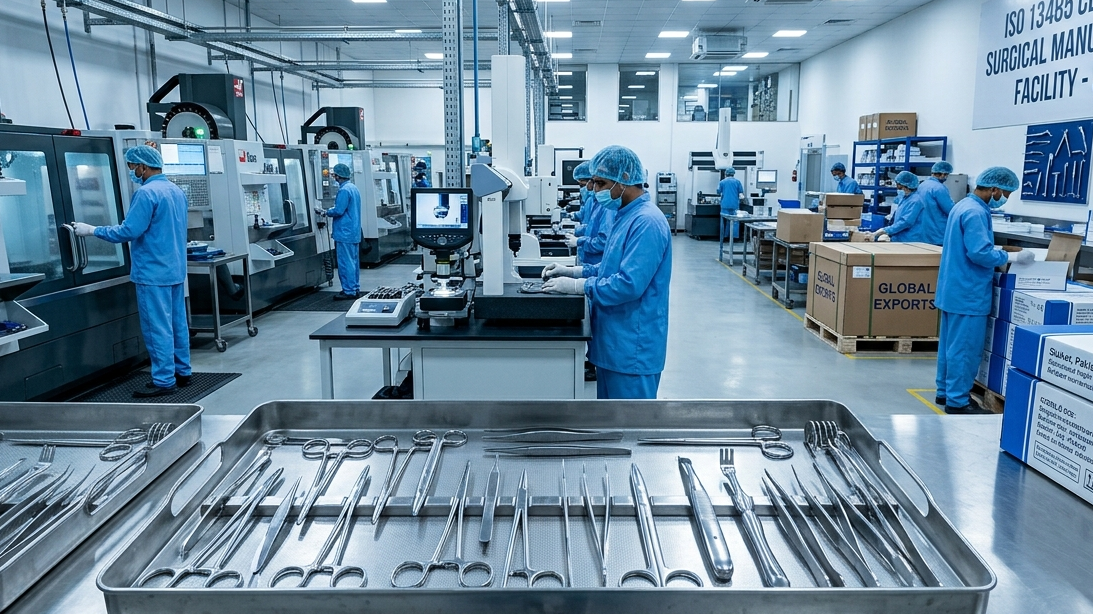
Reliable manufacturers combine skilled craftsmanship with modern CNC machining to produce instruments that meet exact specifications.
Precision ensures:
- Smooth jaw alignment
- Accurate cutting edges
- Comfortable handling
- Excellent surgical performance
3. International Certifications
Always choose suppliers certified under internationally recognized standards, including:
- ISO 13485
- CE Marking
- FDA Registration (where applicable)
- Good Manufacturing Practices (GMP)
These certifications demonstrate compliance with global medical device regulations.
4. Strict Quality Control
Professional manufacturers perform multiple quality inspections throughout production.
Quality checks include:
- Raw material inspection
- Hardness testing
- Surface finishing
- Dimensional accuracy
- Functionality testing
- Final inspection before packaging
This process ensures every instrument meets international standards.
Types of Surgical Instruments Offered
A professional Surgical Instruments Supplier typically offers thousands of instrument models across multiple specialties.
General Surgery
Examples include:
- Scissors
- Forceps
- Needle holders
- Retractors
- Hemostats
- Tissue forceps
- Dressing forceps
Dental Instruments
Common products include:
- Extraction forceps
- Dental elevators
- Mirrors
- Probes
- Curettes
- Bone files
- Scalers
Orthopedic Instruments
These include:
- Bone cutters
- Rongeurs
- Osteotomes
- Bone holding forceps
- Reduction forceps
Gynecology Instruments
Popular products include:
- Speculums
- Curettes
- Uterine forceps
- Dilators
- Scissors
Veterinary Instruments
Veterinary professionals require:
- Animal forceps
- Surgical scissors
- Needle holders
- Castration instruments
- Hoof instruments
Manufacturing Process
High-quality surgical instruments go through a carefully controlled production process.
Step 1: Material Selection
Medical-grade stainless steel is selected based on the required instrument characteristics.
Step 2: Forging
Steel is forged into the required shape while maintaining strength and durability.
Step 3: Machining
CNC machines provide accurate dimensions and perfect symmetry.
Step 4: Heat Treatment
Heat treatment improves hardness and wear resistance.
Step 5: Grinding and Polishing
Each instrument receives a satin or mirror finish for corrosion resistance and professional appearance.
Step 6: Assembly
Multi-component instruments are assembled with precise alignment.
Step 7: Quality Inspection
Every instrument undergoes functionality testing before packaging.
Quality Standards Every Buyer Should Verify
Before selecting a Surgical Instruments Supplier, verify the following:
| Quality Factor | Why It Matters |
|---|---|
| ISO 13485 Certification | Medical device quality management |
| CE Certification | European compliance |
| Stainless Steel Grade | Long-lasting durability |
| Quality Inspection | Product consistency |
| Sterilization Compatibility | Safe reuse |
| Packaging Standards | Product protection |
| Export Experience | Smooth international shipping |
Comparison: Reliable vs Ordinary Supplier
| Feature | Professional Supplier | Ordinary Supplier |
| Material Quality | Medical-grade stainless steel | Low-grade steel |
| Precision | Excellent | Inconsistent |
| Certifications | ISO & CE | Often unavailable |
| Quality Control | Multi-stage inspection | Limited inspection |
| Custom Branding | Available | Limited |
| Export Experience | Global | Local only |
| Product Warranty | Yes | Rarely |
| Customer Support | Professional | Basic |
Industries Served
A leading Surgical Instruments Supplier serves various healthcare sectors.
These include:
- Hospitals
- Surgical Centers
- Dental Clinics
- Medical Universities
- Government Healthcare Departments
- Medical Equipment Distributors
- Healthcare Importers
- OEM Medical Brands
- Veterinary Clinics
OEM and Private Label Manufacturing
Many international buyers prefer OEM manufacturing to build their own brand.
OEM services commonly include:
- Custom laser logo engraving
- Private label packaging
- Barcode labeling
- Customized product codes
- User manuals
- Retail-ready packaging
- Brand-specific quality requirements
Private labeling helps distributors establish a strong market presence while sourcing from experienced manufacturers.
Factors to Consider Before Buying
Before placing an order, buyers should evaluate several important factors.
Product Quality
Always request product samples before placing bulk orders.
Manufacturing Capacity
Ensure the supplier can handle both small and large production volumes.
Minimum Order Quantity (MOQ)
Choose suppliers offering flexible order quantities based on your business needs.
Delivery Time
Reliable suppliers maintain realistic production schedules and on-time deliveries.
Export Documentation
Professional exporters provide:
- Commercial Invoice
- Packing List
- Certificate of Origin
- CE Documentation
- Quality Certificates
Communication
Fast responses and transparent communication indicate a dependable long-term partner.
Benefits of Partnering with an Experienced Surgical Instruments Supplier
Working with an established supplier provides numerous business advantages.
Consistent Product Quality
Standardized manufacturing reduces quality variations.
Better Pricing
Large-scale production lowers manufacturing costs.
Long-Term Partnership
Reliable suppliers support business growth through dependable service.
Technical Expertise
Experienced manufacturers help buyers select the right instruments for different procedures.
Worldwide Shipping
Professional exporters understand international logistics and customs requirements.
Sustainable Manufacturing Practices
Modern healthcare buyers increasingly value environmentally responsible manufacturing. Many reputable suppliers now focus on sustainable practices by reducing waste, recycling stainless steel scrap, using energy-efficient machinery, and adopting eco-friendly packaging materials where possible. Choosing a supplier committed to sustainability can support your organization’s environmental goals while maintaining high product quality.
How to Build a Long-Term Relationship with Your Supplier
Successful partnerships go beyond placing orders. Consider these best practices:
- Communicate your technical requirements clearly.
- Share feedback on product performance.
- Forecast future orders to improve production planning.
- Review quality reports regularly.
- Visit the manufacturing facility when possible.
- Establish clear agreements on pricing, delivery schedules, and warranty policies.
A collaborative relationship often leads to better pricing, priority production, and improved product development.
Frequently Asked Questions (FAQs)
How do I choose the best Surgical Instruments Supplier?
Look for suppliers with ISO 13485 certification, high-quality stainless steel, strong quality control systems, export experience, and positive customer feedback.
Which material is best for surgical instruments?
Medical-grade stainless steel such as AISI 420, AISI 440, German stainless steel, and Japanese stainless steel are widely preferred because of their strength, corrosion resistance, and durability.
Can suppliers provide customized instruments?
Yes. Most professional manufacturers offer OEM, private labeling, custom engraving, customized packaging, and product modifications according to customer requirements.
Why is quality control important?
Quality control ensures every instrument meets dimensional accuracy, functionality, durability, and safety requirements before shipment.
Do surgical instrument suppliers export worldwide?
Yes. Experienced manufacturers regularly export to North America, Europe, the Middle East, Asia, Africa, and many other international markets while complying with applicable export documentation and quality standards.
Conclusion
Choosing the right Surgical Instruments Supplier is essential for ensuring surgical precision, patient safety, and long-term business success. A trusted supplier delivers more than just instruments—they provide quality assurance, regulatory compliance, dependable service, and ongoing support.
Whether you are a hospital, medical distributor, importer, wholesaler, or private-label brand, partnering with an experienced manufacturer helps you reduce procurement risks and maintain consistent product standards. By evaluating certifications, manufacturing capabilities, quality control systems, customization options, and customer support, you can confidently select a supplier that meets your organization’s needs and supports sustainable growth.