

Meta Title: A Day in the Life of a Surgical Tech | Duties, Schedule, Skills & Career Guide
Meta Description: Discover what a day in the life of a surgical tech is really like. Learn about daily responsibilities, operating room routines, required skills, challenges, salary insights, and career tips.
A Day in the Life of a Surgical Tech: An Honest Look Inside the Operating Room
Most people only see a few minutes of an operating room on television. Surgeons perform complex procedures, nurses assist, monitors beep in the background, and everything seems calm and perfectly organized.
The reality is much different.
I once had the opportunity to speak with a surgical technologist after a family member underwent surgery. What impressed me wasn’t just the technical knowledge required—it was the amount of preparation that happened before the surgeon even entered the operating room. Every instrument had a purpose, every movement followed strict safety protocols, and every member of the surgical team knew exactly what needed to happen next.
That conversation gave me a new appreciation for the role of a surgical technologist. While patients may never remember seeing them, surgical techs are often among the first professionals preparing for surgery and among the last to leave the operating room after cleanup.
If you’ve ever wondered what a day in the life of a surgical tech looks like, this guide will walk you through a typical workday, the skills required, the challenges, rewards, and practical advice for anyone considering this career.
Who Is a Surgical Technologist?
A surgical technologist, often called a surgical tech or operating room technician, is a trained healthcare professional who helps prepare operating rooms, sterilizes surgical instruments, assists surgeons during procedures, and helps maintain a safe, sterile environment.
Their work directly supports surgeons, nurses, anesthesiologists, and ultimately, the patient’s safety.
Without a skilled surgical tech, even a routine operation could face unnecessary delays or increased risks.
Starting the Day: Arriving Before the First Surgery
Unlike many office jobs, a surgical tech’s day usually starts early.
Many arrive 30 to 60 minutes before the first scheduled operation.
The first task isn’t assisting in surgery—it’s preparation.
Typical morning responsibilities include:
- Reviewing the day’s surgical schedule
- Checking operating room assignments
- Verifying required surgical instruments
- Inspecting sterile supplies
- Testing surgical equipment
- Confirming patient procedure information
- Preparing instrument trays
This preparation sets the tone for the rest of the day.
Preparing the Operating Room
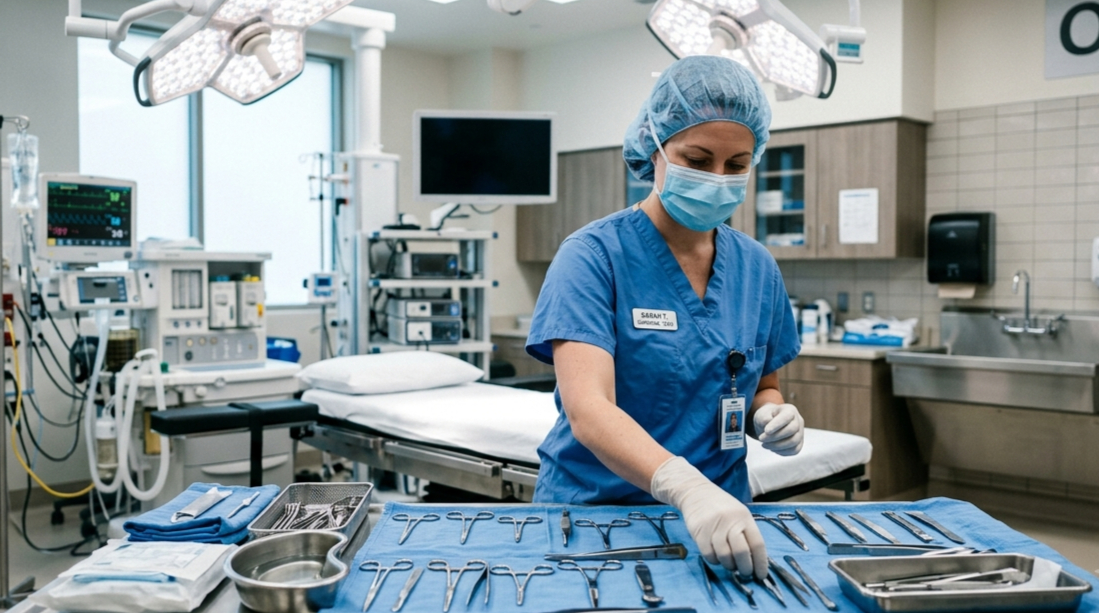
One experienced surgical tech once described operating room preparation like setting up a professional kitchen before dinner service.
Everything has a designated place.
Before surgery begins, the surgical tech carefully arranges:
- Sterile surgical instruments
- Drapes
- Sutures
- Surgical sponges
- Needles
- Electrosurgical equipment
- Suction devices
- Sterile gowns
- Gloves
- Surgical solutions
Missing even one essential instrument could interrupt the procedure.
That’s why organization is one of the most valuable skills in this profession.
The Patient Arrives
Although surgical technologists don’t usually spend long periods with patients, they still play an important role before surgery.
Working alongside nurses and surgeons, they help verify:
- Patient identity
- Surgical procedure
- Operating room setup
- Required implants
- Instrument availability
- Sterile conditions
Patient safety begins long before the first incision.
During Surgery: Staying Focused Every Minute
Once surgery begins, the operating room becomes a highly coordinated environment.
The surgical tech works closely with the surgeon by:
- Passing instruments
- Preparing sutures
- Managing sterile supplies
- Handling surgical specimens
- Maintaining sterile technique
- Anticipating the surgeon’s needs
One of the most impressive skills experienced surgical techs develop is anticipation.
Rather than waiting for instructions, they often know which instrument the surgeon will need next based on years of experience and familiarity with the procedure.
Why Sterility Is So Important
One lesson nearly every surgical tech emphasizes is this:
Sterility isn’t optional.
A single break in sterile technique could increase the risk of infection.
Throughout the procedure, surgical technologists constantly monitor:
- Sterile fields
- Instrument handling
- Glove integrity
- Surgical drapes
- Equipment contamination
- Team movement around the operating room
Even seemingly small mistakes can have serious consequences.
Instrument Counts Save Lives
One responsibility that many people never hear about is counting surgical instruments.
Before, during, and after surgery, the surgical team carefully counts:
- Sponges
- Needles
- Instruments
- Small surgical items
These counts help ensure that nothing is accidentally left inside the patient.
It’s a routine task that plays a critical role in patient safety.
Between Surgeries
Many people imagine long breaks between procedures.
In reality, turnover time is often busy.
After one surgery ends, the team must quickly:
- Remove used instruments
- Dispose of medical waste
- Clean equipment
- Prepare fresh sterile supplies
- Reset the operating room
- Review the next procedure
Efficiency matters because delays can affect multiple patients scheduled throughout the day.
Working with Different Surgical Specialties
One aspect of the job that keeps it interesting is variety.
Depending on the hospital or surgery center, a surgical tech may assist in:
General Surgery
Procedures involving the abdomen and digestive system.
Orthopedic Surgery
Joint replacements, fracture repair, and sports injury procedures.
Cardiovascular Surgery
Operations involving the heart and blood vessels.
Neurosurgery
Complex procedures involving the brain and spinal cord.
Obstetrics and Gynecology
Including cesarean sections and other women’s health procedures.
Plastic Surgery
Reconstructive and cosmetic procedures.
Every specialty requires different instruments and techniques.
Unexpected Situations
Not every day follows the schedule.
Emergency surgeries can arrive at any time.
One surgical tech shared that what was supposed to be a quiet afternoon quickly changed when multiple trauma patients arrived after a highway accident.
The ability to remain calm under pressure is one of the profession’s greatest strengths.
The Physical Side of the Job
People often underestimate how physically demanding this career can be.
A surgical tech may spend hours:
- Standing
- Wearing protective equipment
- Lifting instrument trays
- Moving equipment
- Remaining focused without breaks
Comfortable shoes quickly become one of the most valuable pieces of equipment.
Skills Every Surgical Tech Needs
Technical knowledge alone isn’t enough.
Successful surgical technologists usually possess:
- Excellent organization
- Attention to detail
- Teamwork
- Communication
- Manual dexterity
- Critical thinking
- Time management
- Stress management
- Adaptability
These soft skills are just as important as medical knowledge.
Common Challenges
Like every healthcare profession, surgical technology comes with challenges.
Some include:
- Long shifts
- Emergency procedures
- Emotional situations
- Fast-paced environments
- Physical fatigue
- Strict infection control
- Constant concentration
Despite these demands, many surgical techs describe the work as highly rewarding.
The Most Rewarding Part of the Job
When I ask surgical professionals what keeps them motivated, the answer is surprisingly consistent.
They know their work helps patients receive safe surgical care.
Even though patients may never remember their names, surgical techs contribute to successful outcomes every single day.
That sense of purpose often outweighs the challenges.
If I Were Starting This Career Today
Here’s the advice I’d give anyone entering the profession.
Learn Instrument Names Early
Flashcards and practice kits can make learning much easier.
Build Good Habits
Stay organized from day one.
Small habits become essential during busy surgical schedules.
Never Stop Learning
Medicine constantly evolves.
Continuing education helps surgical techs stay current with:
- New surgical procedures
- Advanced equipment
- Updated safety standards
Ask Questions
Experienced surgical teams usually appreciate curiosity and a willingness to learn.
No one expects beginners to know everything.
A Typical Surgical Tech Schedule
Although every hospital is different, a sample day might look like this:
| Time | Activity |
|---|---|
| 6:30 AM | Arrive and review surgical schedule |
| 7:00 AM | Prepare operating room |
| 7:45 AM | Patient verification and setup |
| 8:00 AM | First surgery begins |
| 10:30 AM | Room turnover |
| 11:00 AM | Second procedure |
| 1:00 PM | Lunch (if schedule allows) |
| 1:30 PM | Afternoon surgeries |
| 4:30 PM | Final cleanup and documentation |
| 5:00 PM | End of scheduled shift (unless on call) |
Emergency cases may significantly change the schedule.
Tips for Future Surgical Techs
If you’re considering this career:
- Observe surgeries if possible.
- Improve anatomy knowledge.
- Practice sterile techniques carefully.
- Develop communication skills.
- Learn medical terminology.
- Stay physically active.
- Be prepared for lifelong learning.
- Focus on teamwork rather than individual recognition.
Frequently Asked Questions
What does a surgical tech do every day?
A surgical tech prepares operating rooms, sterilizes instruments, assists surgeons during procedures, maintains sterile environments, manages surgical supplies, and helps ensure patient safety before, during, and after surgery.
Is being a surgical tech stressful?
It can be. Surgical technologists work in fast-paced environments where attention to detail is essential. However, many professionals find the work meaningful and rewarding.
How long are surgical tech shifts?
Many surgical technologists work 8-, 10-, or 12-hour shifts. Some positions also include evening, weekend, holiday, or on-call responsibilities.
Do surgical techs interact with patients?
Yes, although their interaction is usually brief. They may help prepare the operating room, verify procedures, and assist the surgical team before the patient is anesthetized.
What skills are most important?
Attention to detail, teamwork, organization, communication, manual dexterity, and the ability to remain calm under pressure are essential for success.
Is surgical technology a good career?
For people who enjoy healthcare, teamwork, and working in a fast-paced environment, surgical technology can offer a stable and fulfilling career with opportunities for growth and specialization.
Final Thoughts
A day in the life of a surgical tech is filled with preparation, precision, and teamwork. While the role often happens behind the scenes, it is fundamental to safe and successful surgical care. From setting up the operating room before dawn to maintaining sterile technique during complex procedures and preparing for the next case, surgical technologists play a vital role in every stage of surgery.