
The anterior cruciate ligament (ACL) is one of the most important stabilizing ligaments in the knee. When it tears due to sports injuries, accidents, or sudden twisting movements, many people assume surgery is the only option. However, ACL non surgical treatment has become increasingly popular—especially among individuals who want to avoid surgery, have partial tears, or lead a lifestyle that doesn’t require intense pivoting activities.
This comprehensive guide explains everything you need to know about ACL non surgical recovery, including who qualifies, what treatments are involved, how long recovery takes, and how to return safely to daily activities or sports.
What Does ACL Non Surgical Treatment Mean?
“ACL non surgical” refers to recovering from an ACL injury without reconstructive surgery. Instead, the treatment plan focuses on:
- Knee strengthening
- Controlled physical therapy
- Bracing for stability
- Swelling reduction
- Lifestyle modifications
- Functional training
For many people—especially those with partial ACL tears, older adults, or individuals with less physically demanding lifestyles—this non surgical approach is highly effective.
Who Is a Good Candidate for ACL Non Surgical Recovery?
Not every ACL injury requires surgery. You may be an ideal candidate for ACL non surgical treatment if:
You Have a Partial ACL Tear
If the ligament is stretched or partially torn but still provides some stability, non surgical rehab can fully restore knee function.
Your Knee Is Not Excessively Unstable
If your knee does not buckle or give way during regular activities, conservative treatment may be safe and successful.
You Are Not Engaged in High-Impact or Pivoting Sports
If you do not play sports like football, basketball, soccer, or skiing, you may not need surgery.
You Prefer a Conservative Approach First
Many patients choose to try ACL non surgical rehab before considering a surgical procedure.
You Have No Other Major Knee Injuries
If there is no meniscus tear or ligament damage requiring correction, non surgical treatment may work well.
Benefits of ACL Non Surgical Treatment
Choosing a non surgical approach has several advantages:
No Surgical Risks
Avoiding risks like infection, anesthesia complications, and graft failure.
Faster Initial Recovery
You avoid the long post-surgery healing process.
Cost-Effective
Non surgical treatment is far less expensive than ACL reconstruction.
Natural Knee Function Retained
Your natural ligament remains intact, and the focus is on strengthening supportive muscles.
Safe and Effective for the Right Patient
Research shows many individuals regain full function without surgery.
The Phases of ACL Non Surgical Recovery
A structured rehabilitation program is essential for success. Below are the key phases:
Phase 1: Immediate Injury Management (Weeks 1–2)
Goals:
- Reduce swelling
- Restore range of motion
- Minimize pain
- Begin gentle strengthening
Treatments Include:
RICE Protocol
- Rest: Avoid activities that strain the knee.
- Ice: Apply 20 minutes every 2–3 hours.
- Compression: Elastic bandage or knee sleeve.
- Elevation: Reduce swelling.
Anti-Inflammatory Medications
Your doctor may prescribe NSAIDs to reduce pain and inflammation.
Knee Brace for Stability
A functional ACL brace may help prevent the knee from buckling.
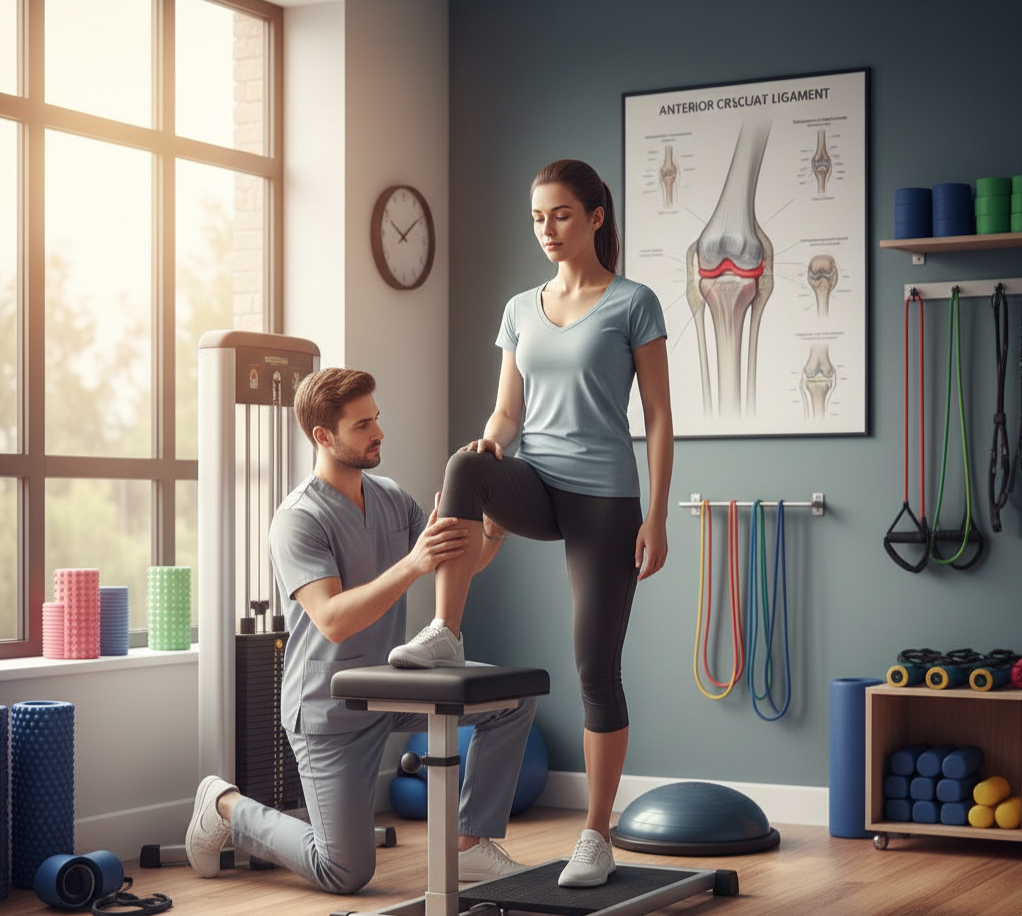
Early Physiotherapy
Gentle exercises focus on restoring motion:
- Heel slides
- Quadriceps sets
- Straight leg raises
- Stationary cycling (light)
Phase 2: Early Strengthening (Weeks 2–6)
Goals:
- Strengthen muscles around the knee
- Improve balance
- Begin functional movement training
Key Exercises:
- Leg presses (light resistance)
- Hamstring curls
- Mini squats
- Step-ups
- Glute bridges
- Core strengthening
Strengthening the quadriceps, hamstrings, glutes, and calf muscles is essential because these muscle groups help compensate for the injured ACL.
Phase 3: Advanced Strengthening & Stability (Weeks 6–12)
Goals:
- Improve knee stability
- Enhance joint control
- Increase strength to near-normal levels
Exercises Include:
- Single-leg balance drills
- Resistance band exercises
- Lunges
- Lateral step training
- Low-impact agility drills
- Swimming or elliptical machine
This phase is crucial for re-establishing neuromuscular control—the body’s ability to coordinate movement without the ACL.
Phase 4: Functional Training & Return to Activity (3–6 Months)
Goals:
- Prepare for daily activities
- Regain confidence in the knee
- Return to low- or moderate-impact sports
Training Includes:
- Jogging
- Controlled plyometrics
- Sport-specific drills (if safe)
- Agility ladders
- Strength progression
If you plan to return to sports like cycling, running, or hiking, this phase ensures your knee is strong enough.
Knee Bracing in ACL Non Surgical Treatment
A knee brace is often recommended to prevent instability.
Types of braces used:
Functional ACL Brace
Provides support during movement and prevents the tibia from sliding forward.
Hinged Knee Brace
Helps with stability and protects ligaments during recovery.
Sports-Specific Braces
Used for returning to physical activity safely.
Bracing is not mandatory but can be extremely helpful during high-demand activities.
How Long Does ACL Non Surgical Recovery Take?
The timeline varies, but most people recover within:
Months for Full Daily Function
Months for Non-Pivoting Sports
Recovery is usually faster than post-surgery rehabilitation because there is no graft healing involved.
Can You Return to Sports Without ACL Surgery?
Yes—but it depends on the sport.
Sports You Can Usually Return to:
- Swimming
- Running
- Bicycling
- Weightlifting
- Hiking
- Rowing
Sports That May Require Surgery:
- Football
- Soccer
- Basketball
- Tennis
- Rugby
- Skiing
These sports involve cutting, pivoting, and sudden directional changes—actions heavily dependent on a functional ACL.
Risks of ACL Non Surgical Treatment
While many people recover successfully, there are potential risks:
Knee Instability
Without proper strengthening, the knee may buckle or give way.
Future Meniscus Injury
Instability can increase the risk of meniscus tears.
Long-Term Cartilage Wear
Weak knee support may lead to early osteoarthritis.
Slower Return to High-Impact Activity
If your goal is to play pivot-heavy sports, surgery may still be required.
When Is Surgery Necessary?
Even with conservative care, surgery may become necessary if:
- The knee continues to buckle.
- You want to return to pivoting sports.
- Pain and swelling persist after several months.
- You develop new injuries like meniscus tears.
An orthopedic specialist can evaluate your progress and determine whether surgery should be reconsidered.
Tips for a Successful ACL Non Surgical Recovery
Commit Fully to Physical Therapy
Your success depends heavily on consistency.
Use a Brace for High-Demand Activities
It protects your knee from further injury.
Strengthen the Entire Leg
Balanced muscle strength improves joint stability.
Maintain a Healthy Weight
Extra weight increases pressure on the injured knee.
Avoid Sudden Twisting or Pivoting Movements
These movements can worsen the injury.
Stay Patient
Rehabilitation requires dedication and time.
ACL Non Surgical vs. Surgical: Which Is Better?
Choose Non Surgical If:
- You have a partial tear
- You have minimal instability
- You don’t play pivot-heavy sports
- You prefer conservative care
Choose Surgery If:
- You are an athlete
- Your knee frequently gives out
- You have a complete tear
- You have additional knee injuries
Both approaches are valid—the best choice depends on your lifestyle and injury severity.
Conclusion: Is ACL Non Surgical Treatment Effective?
Yes—ACL non surgical treatment can be highly effective for the right patient. With proper rehabilitation, many individuals regain full knee function, return to daily activities, and maintain long-term mobility without surgery.
For those with partial tears, mild instability, or non-athletic lifestyles, non surgical care is often the preferred, safe, and efficient approach.
If you are exploring your options, consult a sports medicine specialist or physiotherapist to create a personalized recovery plan.