

Introduction
The healthcare field continues to expand, creating high demand for skilled professionals who support surgery teams. One of the fastest-growing careers in the medical industry is Surgical Technology. Many students and career changers search for a 12 month surgical tech program because it offers a fast, affordable, and effective path into a respected healthcare role.
A 12-month surgical tech program—also known as an accelerated surgical technologist program—prepares students for entry-level positions assisting surgeons, nurses, and anesthesia teams during operations. This guide explains everything you need to know: program structure, benefits, job opportunities, salary expectations, certification paths, and why this one-year program is one of the most popular choices in the medical field.
What Is a 12 Month Surgical Tech Program?
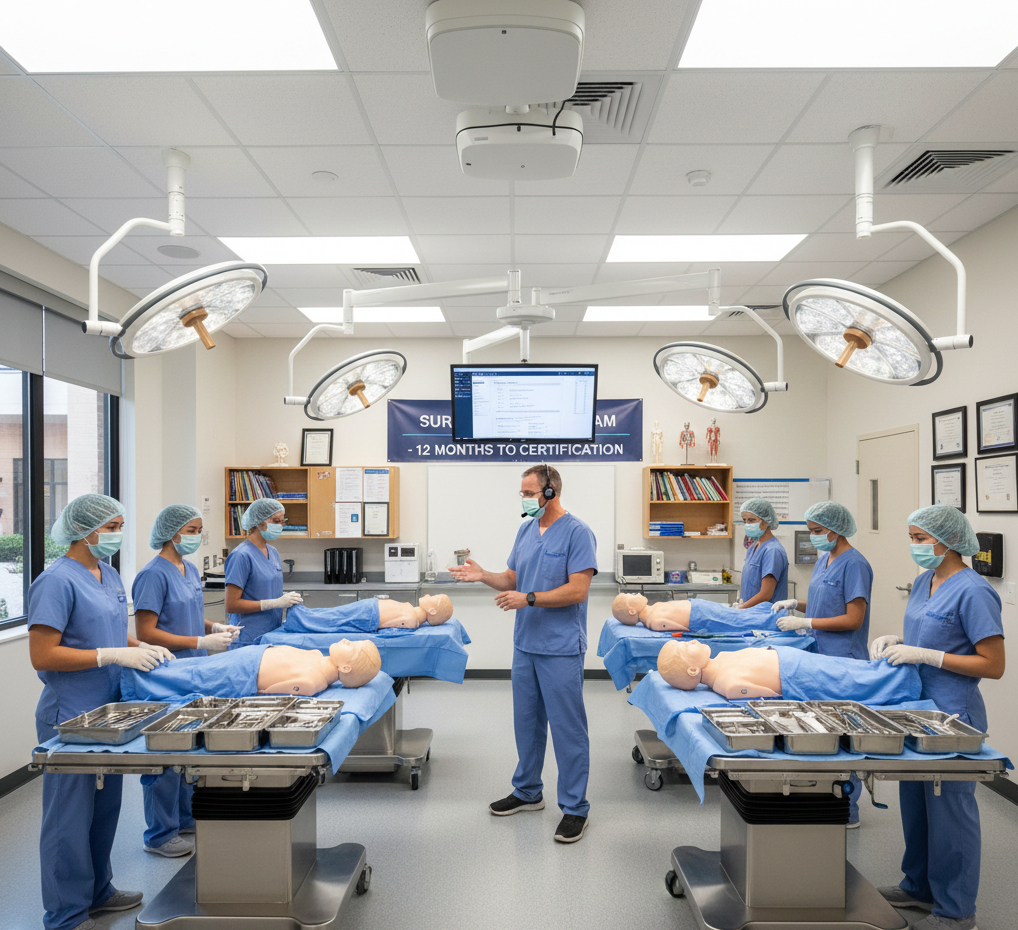
A 12 month surgical tech program is an accelerated training course that teaches students the essential skills needed to work as a Surgical Technologist (also known as Scrub Tech, Operating Room Technician, or OR Tech). These programs typically include:
- Classroom learning
- Hands-on laboratory practice
- Real clinical experience in hospitals or surgical centers
Unlike 2-year college degrees, a 12-month program focuses only on surgical skills, making it a fast and efficient path to employment.
What Surgical Technologists Do
A surgical technologist plays a critical role in the operating room. Their responsibilities include:
Before Surgery
- Preparing the operating room
- Sterilizing surgical instruments and equipment
- Setting up surgical trays
- Ensuring supplies are available
During Surgery
- Passing instruments to the surgeon
- Maintaining sterile fields
- Handling specimens
- Monitoring equipment
- Assisting with retractors or suction equipment
After Surgery
- Cleaning the OR
- Reprocessing instruments
- Preparing the room for the next operation
This makes surgical techs essential members of every surgical team.
Why Choose a 12 Month Surgical Tech Program?
Many students prefer the 12-month format for several reasons:
Fast Entry Into a Stable Career
In just one year, you can be qualified to work in hospitals, outpatient centers, or specialty surgical clinics.
Affordable Tuition
Accelerated programs typically cost less than longer college degrees.
High Employment Demand
Surgical technologists are in demand due to:
- Growing surgical procedures
- Aging population
- Expansion of surgical centers
- Need for sterile and safe operating environments
Good Salary Potential
Most surgical techs earn competitive wages immediately after completing their training.
Career Advancement Opportunities
A 12-month program is a solid foundation for future careers such as:
- Surgical first assistant
- Sterile processing specialist
- Medical equipment representative
- Healthcare supervisor
- Nursing or other medical programs
What Students Learn in a 12 Month Surgical Tech Program
While each school has its own curriculum, most programs include the following core areas:
Anatomy and Physiology
Understanding the human body is essential for assisting in surgeries.
Medical Terminology
Students learn terms used in hospitals, surgery departments, and patient care.
Surgical Procedures
This includes instruction on:
- General surgery
- Orthopedics
- Obstetrics and gynecology
- Cardiovascular surgery
- ENT surgery
- Neurosurgery
Sterile Processing and Infection Control
Students learn proper methods to:
- Clean surgical instruments
- Maintain sterile fields
- Prevent contamination
- Follow safety protocols
Surgical Instrumentation
Training covers identification and usage of:
- Scalpels
- Scissors
- Forceps
- Retractors
- Clamps
- Suturing tools
- Laparoscopic equipment
Patient Care and Safety
Surgical techs learn how to assist patients before and after surgery.
Operating Room Technology
Hands-on training with:
- Electrosurgical units
- Suction devices
- Surgical tables
- Specimen handling systems
Clinical Externship
Students spend several weeks in real hospitals to gain experience under supervision.
How Long Does It Take to Complete?
Most 12 month surgical tech programs run for:
- 8–10 months of classroom and lab work
- 2–4 months of clinical externship
Some programs may offer evening or weekend schedules for working adults.
Admission Requirements
Although each school varies, most require:
- High school diploma or GED
- Background check
- Drug screening
- Immunization records
- Basic English and math skills
Some programs also require CPR certification before starting clinical rotations.
Certification After a 12 Month Surgical Tech Program
After completing training, most graduates pursue professional certification. The most recognized credentials include:
CST – Certified Surgical Technologist
Issued by the National Board of Surgical Technology and Surgical Assisting (NBSTSA).
NCCT – Tech in Surgery Certification
Offered by the National Center for Competency Testing.
Certification improves:
- Job opportunities
- Salary
- Professional credibility
- Career advancement
Where Surgical Techs Work
Graduates of a 12-month surgical tech program can work in:
- Hospitals
- Outpatient surgical centers
- Plastic surgery clinics
- Orthopedic practices
- Obstetrics & gynecology centers
- Endoscopy units
- Transplant centers
- Trauma departments
Surgical technologists are needed in all types of operating rooms.
Job Outlook and Salary Expectations
Surgical technology is one of the fastest-growing healthcare careers.
Job Outlook
Demand for surgical techs is expected to grow due to:
- Increased surgeries
- New surgical technologies
- Expansion of ambulatory surgical centers
- Shortage of trained healthcare workers
Salary
Although pay varies by location and experience, most surgical techs earn:
- $19–$30 per hour
- $40,000–$65,000 annually
- Higher wages with experience, certification, or specialization
Overtime and night shift differentials can boost income.
Benefits of Completing a 12 Month Surgical Tech Program
Quick entry into the medical field
Begin earning in just one year.
Hands-on learning
Practice skills in real operating rooms.
Affordable career preparation
Less expensive than multi-year programs.
High job satisfaction
You become an important part of life-saving procedures.
Career advancement opportunities
You can specialize or grow into leadership roles.
Tips for Choosing the Right 12 Month Surgical Tech Program
Selecting the right school is important. Here’s what to look for:
Accreditation
Always choose a program accredited by:
- CAAHEP (Commission on Accreditation of Allied Health Education Programs)
- ABHES (Accrediting Bureau of Health Education Schools)
Accreditation qualifies you for certification exams.
Clinical Experience Quality
Hospitals and surgical centers that partner with the school should be reputable and busy.
Job Placement Support
Good programs help graduates find employment quickly.
Modern labs and equipment
Training should include hands-on practice with updated surgical tools and OR technology.
Instructor Experience
Teachers should be experienced surgical technologists or nurses.
Who Should Enroll in a 12 Month Surgical Tech Program?
This career is ideal for people who:
- Want a fast, rewarding medical career
- Enjoy hands-on work
- Have strong attention to detail
- Like fast-paced environments
- Want to help patients
- Feel comfortable in clinical settings
It is also a good choice for career changers and recent graduates.
Conclusion
A 12 month surgical tech program offers a fast, affordable, and solid path into the surgical field. In just one year, students learn the skills needed to assist surgeons, maintain sterile environments, prepare operating rooms, and ensure patient safety during procedures. With strong job demand, competitive salaries, and multiple opportunities for advancement, this career remains one of the best entry-level options in healthcare.
Whether you’re exploring medical careers, switching professions, or seeking fast training, a one-year surgical technology program gives you the knowledge and confidence to succeed in the operating room.