
Introduction
The healthcare industry depends on a wide range of skilled professionals to keep hospitals, surgical centers, and clinics running smoothly. Among these important roles, one job stands out as essential for patient safety: cleaning and sterilizing surgical instruments. Many people searching online ask, “What is the job called when you clean surgical instruments?”
The official job title for this work is usually “Sterile Processing Technician”, also known as:
- Central Sterile Technician
- Surgical Instrument Technician
- Sterile Processing and Distribution (SPD) Technician
- Central Service Technician
- Instrument Reprocessing Technician
- Medical Equipment Preparer
No matter which name is used, the role is a vital part of the hospital team. This article explores the job in detail, including responsibilities, skills required, career growth, training options, salary expectations, and why the profession is in high demand.
What Is the Job Called When You Clean Surgical Instruments?
The most common and accurate job title is Sterile Processing Technician (SPT). This professional is responsible for cleaning, disinfecting, and sterilizing surgical instruments used during medical procedures.
Since medical facilities perform thousands of surgeries every day, sterile processing departments operate nonstop to ensure every instrument is properly prepared, safe, and ready for the next procedure.
Why Sterile Processing Is Important
Before any surgery begins, a full set of clean and sterilized instruments must be ready. If instruments are not properly cleaned or sterilized, patients are at risk of:
- Infections
- Surgical complications
- Delays or cancellations of surgeries
- Harm due to contaminated instruments
That is why sterile processing technicians are essential for:
Preventing infections
Sterile tools reduce the chances of bacteria or viruses entering the surgical site.
Supporting surgeons and nurses
They depend on sterile processing staff to prepare instruments correctly.
Maintaining hospital standards and compliance
Healthcare facilities must meet strict sterilization guidelines from regulatory bodies.
Ensuring patient safety
Properly sterilized instruments save lives and prevent contamination.
This makes sterile processing one of the most important behind-the-scenes jobs in healthcare.
Daily Responsibilities of a Sterile Processing Technician
If you’re wondering what the job involves, here are the main tasks performed daily:
A. Decontamination
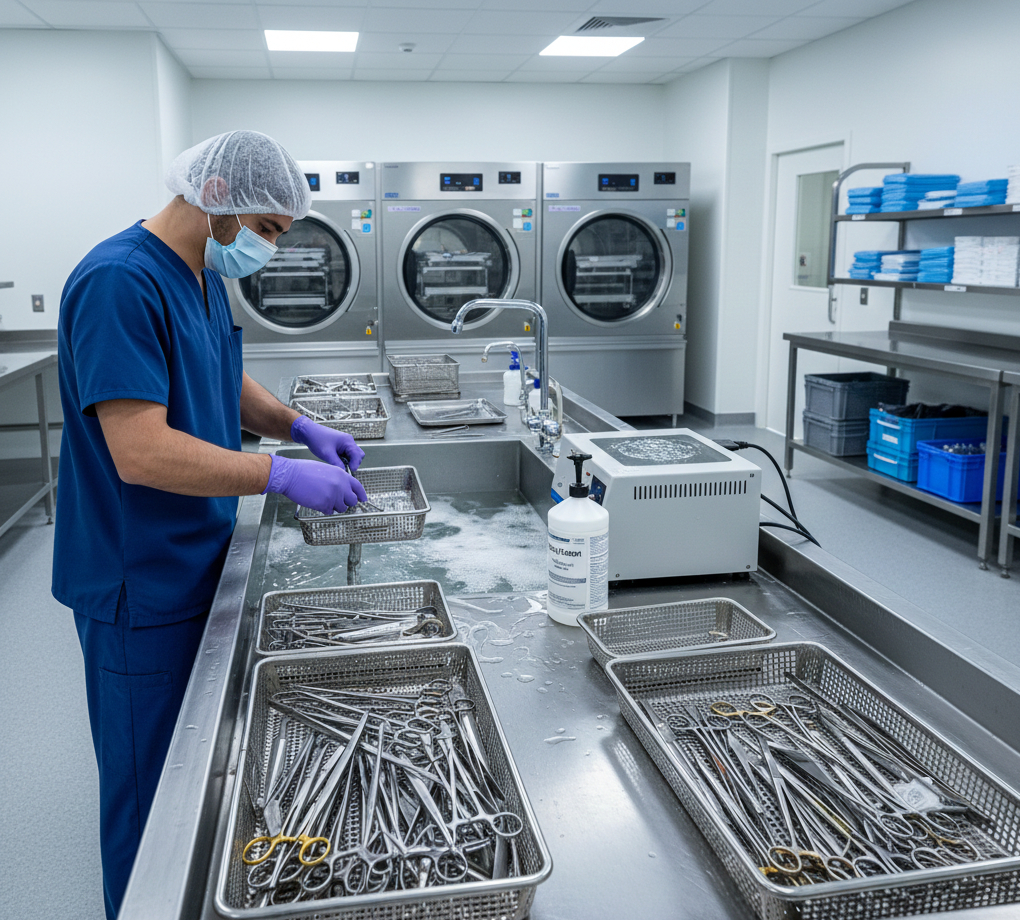
Used surgical instruments are transported to the decontamination area. Technicians:
- Rinse instruments to remove visible debris
- Use enzymatic detergents
- Operate washers and ultrasonic cleaning machines
- Separate instruments by type and specialty
This phase is critical because proper cleaning ensures effective sterilization later.
B. Inspection and Assembly
After cleaning, technicians move instruments to a clean room where they:
- Inspect each tool for cracks, rust, or damage
- Assemble surgical trays based on hospital or surgeon preferences
- Count and organize instruments for accuracy
- Prepare sets for sterilization
Attention to detail is crucial in this stage.
C. Sterilization
Sterile processing technicians operate different types of sterilizers:
- Autoclaves (steam sterilizers)
- Dry heat sterilizers
- Gas plasma sterilizers
- Chemical sterilization systems
Each instrument set is labeled, packed, and sterilized according to strict guidelines.
D. Storage and Distribution
Once instruments are sterilized:
- Technicians store trays in sterile storage rooms
- Deliver instruments to operating rooms (OR)
- Ensure OR staff receive the correct sets before surgery
This ensures smooth workflow in surgical departments.
Skills Required for the Job
Sterile processing is a highly technical career that requires:
Attention to detail
Every instrument must be inspected carefully to avoid errors.
Knowledge of medical instruments
Understanding hundreds of different tools is part of the job.
Mechanical skills
Technicians operate sterilizers, washers, and automated machines.
Physical stamina
The job involves standing, lifting trays, and moving equipment.
Infection control awareness
Strict safety procedures must be followed at all times.
Ability to work fast
Operating rooms depend on timely delivery of sterilized tools.
These skills ensure instruments are prepared correctly and efficiently.
Where Sterile Processing Technicians Work
People who clean surgical instruments commonly work in:
- Hospitals
- Outpatient surgical centers
- Dental surgery clinics
- Endoscopy centers
- Medical device reprocessing companies
- Specialty surgical facilities
Hospitals typically have the highest demand due to the number of surgeries performed daily.
Training and Certification
While some places hire technicians with on-the-job training, many medical facilities prefer certified professionals.
The most recognized certifications are:
CRCST — Certified Registered Central Service Technician
Issued by the Healthcare Sterile Processing Association (HSPA).
CSPDT — Certified Sterile Processing and Distribution Technician
Issued by CBSPD (Certification Board for Sterile Processing & Distribution).
CER — Certified Endoscope Reprocessor
For those specializing in flexible scope reprocessing.
Training programs usually last 3 to 12 months and include:
- Instrument identification
- Sterilization methods
- Microbiology basics
- Infection control procedures
- Equipment handling
- Safety standards
Certification improves job opportunities, salary, and career growth.
Salary Expectations
Salaries vary by location, experience, and certification. On average:
- Entry-level: $15–$22 per hour
- Certified technicians: $20–$28 per hour
- Experienced or specialized staff: $30+ per hour
- Supervisors/Managers: $55,000–$85,000 annually
Areas with large hospitals or high cost of living usually pay more.
Career Growth Opportunities
Sterile processing is not just a job—it’s a career path with several advancement opportunities.
You can grow into roles like:
Lead Sterile Processing Technician
Supervises daily workflow.
Sterile Processing Supervisor
Manages staff and department operations.
Sterile Processing Manager
Oversees SPD operations hospital-wide.
Surgical Technologist
Works in the operating room assisting surgeons.
Infection Control Specialist
Ensures compliance with safety regulations.
Quality Assurance Technician
Monitors instrument quality and reprocessing accuracy.
The field offers long-term job security and multiple paths for advancement.
Why the Job Is in High Demand
Healthcare systems rely heavily on sterile processing professionals. Demand is increasing because of:
Rising number of surgeries
More surgeries mean more instruments to clean.
Strict infection control standards
Hospitals must follow detailed sterilization protocols.
Shortage of skilled technicians
Many facilities need more trained staff.
Rapid expansion of outpatient surgery centers
These centers depend on sterile processing teams.
New surgical technologies
Advanced instruments require skilled reprocessing.
This makes sterile processing a stable, future-proof career.
Benefits of Becoming a Sterile Processing Technician
This job offers a variety of advantages:
High job security
Hospitals always need skilled sterilization staff.
Good salary and growth potential
Certification boosts earnings quickly.
Meaningful work
You directly contribute to patient safety.
Short training period
Entry into the field is faster than many medical careers.
Opportunities to move into surgical or leadership roles
The job opens the door to many healthcare positions.
For people looking for a stable, respected career, this role is a strong choice.
SEO Keyword Focus: “What Is the Job Called When You Clean Surgical Instruments”
Throughout this article, major SEO keywords and related phrases have been naturally integrated, such as:
- What is the job called when you clean surgical instruments
- Sterile processing technician
- Cleaning and sterilizing surgical instruments
- Surgical instrument cleaning job
- SPD technician duties
- Central sterile technician job description
This helps your content rank for multiple search variations, giving you strong visibility on Google.
Conclusion
So, what is the job called when you clean surgical instruments?
The official term is Sterile Processing Technician, also known as a central service or surgical instrument technician. These healthcare professionals play a vital role in ensuring all surgical tools are properly cleaned, disinfected, sterilized, and prepared for safe use.
The job requires attention to detail, technical knowledge, and a commitment to patient safety. With strong demand, competitive salaries, and opportunities for career growth, the sterile processing field is one of the most valuable yet overlooked careers in healthcare.
If you’re creating content or running a healthcare business, using this keyword helps attract readers searching for job information, career guidance, or sterilization training programs.