

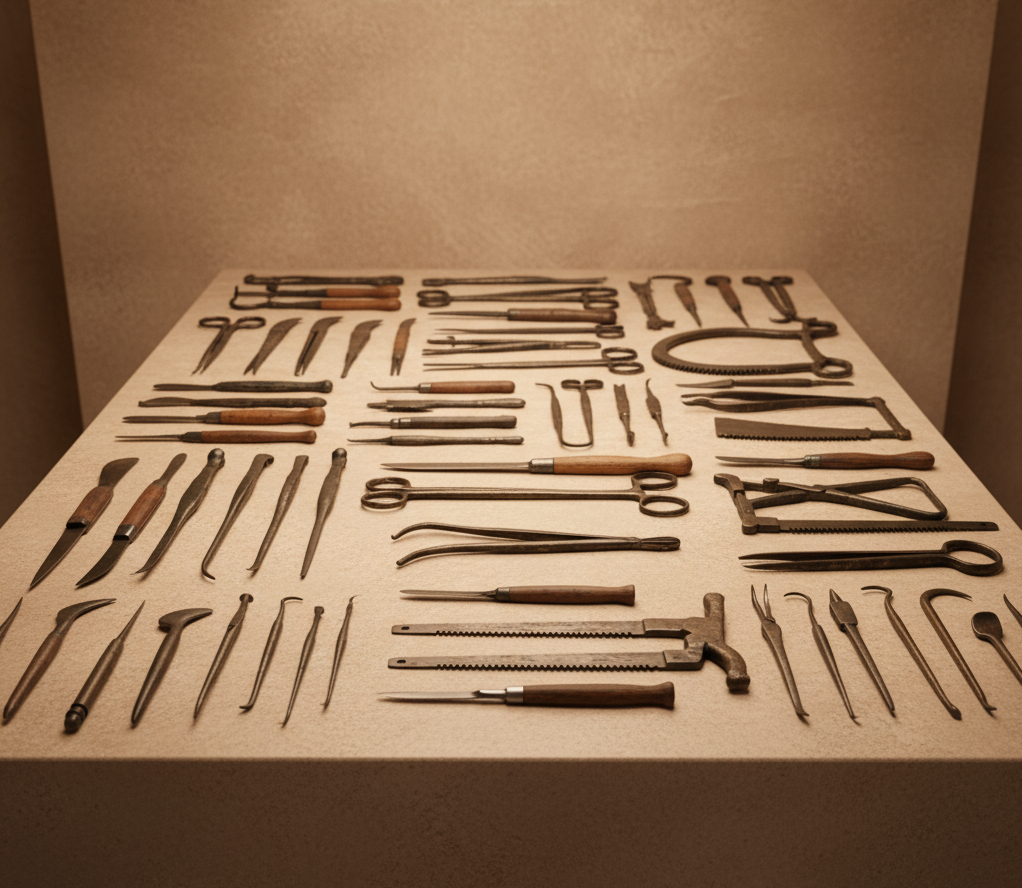
When we talk about the evolution of surgery, one name stands out above all others: Al Zahrawi, also known as Abu al-Qasim Al-Zahrawi (936–1013 CE). Often called the Father of Modern Surgery, Al Zahrawi revolutionized the medical world with his extensive research, detailed medical encyclopedia, and—most importantly—his invention and documentation of more than 200 surgical instruments. Today, these tools serve as the foundation for many modern surgical instruments used in hospitals worldwide.
This article provides an in-depth, SEO-optimized look at Al Zahrawi surgical instruments, exploring their history, types, uses, and importance in modern surgical practice.
Who Was Al Zahrawi?
Al Zahrawi was a pioneering Andalusian physician and surgeon who lived during the Islamic Golden Age in Córdoba, Spain. His remarkable 30-volume encyclopedia “Al-Tasrif” covered various fields of medicine, but its surgical section had the greatest impact. In this work, Al Zahrawi illustrated and explained dozens of surgical tools, many of which he invented.
His commitment to innovation and patient care laid the groundwork for modern surgical techniques and tools. For centuries, European medical schools used his work as a primary surgical textbook.
Why Al Zahrawi’s Surgical Instruments Are Important
Before Al Zahrawi, surgical instruments lacked uniformity. They were often crude, unrefined, and poorly documented. Al Zahrawi introduced:
Detailed illustrations of instruments
So surgeons could learn proper shape and function.
Standardized designs
Ensuring tools worked effectively and consistently.
New inventions
That solved medical challenges of his time.
Tools for multiple specialties
Including dentistry, obstetrics, orthopedics, ENT, and general surgery.
His influence continues today, as many modern instruments trace their origins to his ideas.
Types of Al Zahrawi Surgical Instruments
Al Zahrawi designed instruments for nearly every branch of medicine. Modern surgical kits still contain tools based on his original designs.
Below are the major categories of Al Zahrawi surgical instruments, with examples and their uses.
Cutting Instruments
These tools were developed for incisions, tissue removal, and dissection.
Scalpel (Miqtarah)
Al Zahrawi refined existing scalpel designs, creating sharper, more precise blades for clean incisions.
Bone Saw
Used for amputations and orthopedic operations, his bone saw featured serrated teeth similar to modern designs.
Cautery Knives
He invented over 50 types of cautery tools for burning tissue, stopping bleeding, and treating tumors.
Grasping and Holding Instruments
Al Zahrawi recognized the need for tools that allowed surgeons to hold tissues without causing damage.
Forceps (Malaqit)
He described various types of forceps for:
- Removing foreign objects
- Handling delicate tissue
- Assisting childbirth
Obstetric Forceps
One of his groundbreaking inventions, used to help deliver babies safely.
Clamping and Occluding Instruments
These instruments were essential for controlling bleeding during surgery.
Hemostatic Clamps
Al Zahrawi created early versions of clamps used to stop blood flow—similar to today’s mosquito forceps.
Ligature Tools
He developed instruments to tie off blood vessels, reducing surgical bleeding significantly.
Retracting Instruments
To improve visibility during surgery, he designed retractors that pulled tissue aside.
Skin Retractors
Used for widening incisions during soft-tissue procedures.
Vaginal Speculum
His design closely resembles the modern bivalve speculum used in gynecology.
Suturing Instruments
Al Zahrawi contributed heavily to wound closure techniques.
Suturing Needles
He standardized the shapes of needles—curved, straight, and semi-curved.
Catgut Sutures
Al Zahrawi introduced catgut, the material still used for absorbable sutures today.
This discovery revolutionized internal wound healing.
Dental Instruments
One of Al Zahrawi’s most remarkable contributions was to dentistry—he practically pioneered the field.
Dental Extraction Forceps
Used to remove damaged or infected teeth.
Scrapers and Probes
For cleaning teeth, removing plaque, and treating gum disease.
Cautery Tools for Oral Surgery
He used heated instruments to treat mouth tumors and bleeding.
Because of his innovations, Al Zahrawi is known as the Father of Modern Dentistry as well.
ENT (Ear, Nose, and Throat) Instruments
Al Zahrawi introduced instruments still used in ENT practice.
Tonsil Snare
A looped tool used to remove tonsils.
Ear Probe
For removing objects and cleaning ear canals.
Nasal Forceps
Used to correct nasal blockages and remove foreign bodies.
Gynecological and Obstetric Instruments
He was deeply concerned with women’s health and safety during childbirth.
Vaginal Speculum
To examine and treat gynecological conditions.
Obstetric Hooks
Used to assist with difficult deliveries safely.
Umbilical Cord Clamp
Designed to cut and tie the umbilical cord hygienically.
Orthopedic Instruments
He developed several tools for bones, fractures, and dislocations.
Bone File
Used to smooth fractured bone ends.
Bone Saw
A much better-designed version than earlier medical saws.
Joint Reduction Tools
He described splints and methods for treating shoulder dislocation.
Specialized Surgical Instruments
Some instruments were unique inventions ahead of their time.
Lithotomy Tools
For removing bladder and kidney stones.
Burn Treatment Tools
Including specialized cautery instruments.
Wound Inspection Mirrors
A precursor to modern surgical endoscopes.
How Al Zahrawi’s Instruments Influenced Modern Surgery
Al Zahrawi’s instruments were not just practical—they were revolutionary. Here’s how they shaped modern surgical practice:
Standardization
His precise illustrations led to more uniform instrument manufacturing.
Surgical Safety
Tools like clamps, retractors, and forceps reduced surgical risks.
Improved Outcomes
Refined cautery tools and suturing methods increased patient survival.
Surgical Education
For 500+ years, medical schools across Europe taught surgery through Al-Tasrif.
Multidisciplinary Innovation
Al Zahrawi advanced ENT, dentistry, obstetrics, general surgery, and orthopedics.
Why Learning About Al Zahrawi Surgical Instruments Matters Today
Even though his instruments are centuries old, they remain essential to modern medical education for several reasons:
They teach the origin of today’s surgical tools
They inspire innovation and creativity
They highlight the importance of precision in tool design
They demonstrate the historical progression of surgical science
Healthcare students, surgical technicians, and historians all study Al Zahrawi’s instruments to understand how modern surgery evolved.
Conclusion: Al Zahrawi’s Legacy Lives Through His Instruments
Al Zahrawi’s contribution to surgical science cannot be overstated. His 200+ surgical instruments laid the foundation for modern surgery, influencing everything from scalpels and forceps to dental tools and cautery devices.
Today, when surgeons use instruments in an operating room, many of those designs trace their roots back to Al Zahrawi, the brilliant mind who transformed medicine forever.
For anyone studying medical history, surgical technology, or instrument development, understanding Al Zahrawi surgical instruments is essential. His innovations continue to shape the medical world more than a thousand years later.